
Email Us

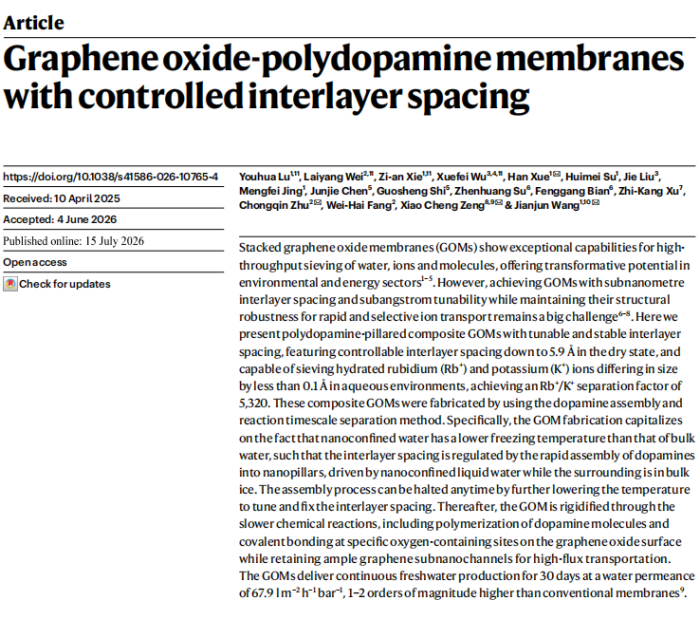
CellStore Chief Scientist Professor Jianjun Wang and his collaborators have published a landmark study in Nature. 

cellstore-chief-scientist-publishes-groundbreaking01.png


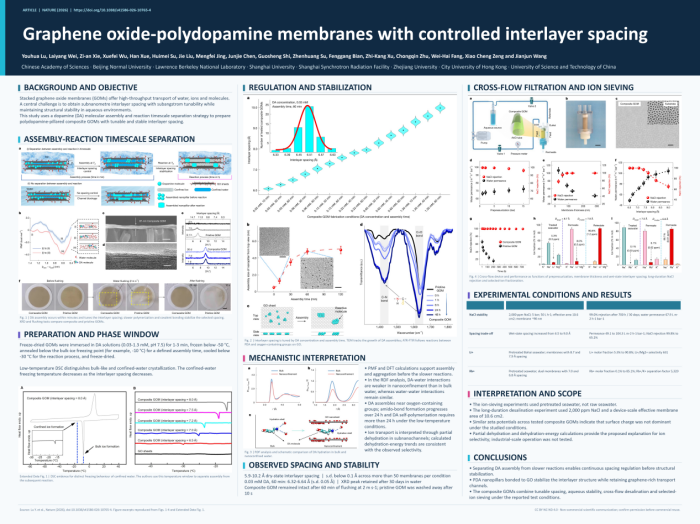
The paper, titled “Graphene oxide-polydopamine membranes with controlled interlayer spacing,” presents a novel method for achieving continuous, sub-angstrom regulation of membrane interlayer spacing.
 

Scientific Achievement

cellstore-chief-scientist-publishes-groundbreaking02.png


By investigating the crystallization behavior of both bulk and nanoconfined water, the team established a precise temperature window that separates rapid dopamine assembly from slower polymerization and covalent reactions. This temporal separation enables continuous tuning of the membrane’s interlayer spacing, followed by structural stabilization — a level of control previously unattainable.

From Understanding Ice to Controlling Ice

cellstore-chief-scientist-publishes-groundbreaking03.png


This research reflects the scientific pathway that defines CellStore’s core mission:

  • Understanding Ice – revealing how water crystallizes and undergoes phase transitions in confined environments

  • Designing Ice – translating these mechanisms into rational formulations and time–temperature pathways

  • Controlling Ice – making freezing processes tunable, reproducible, and scalable


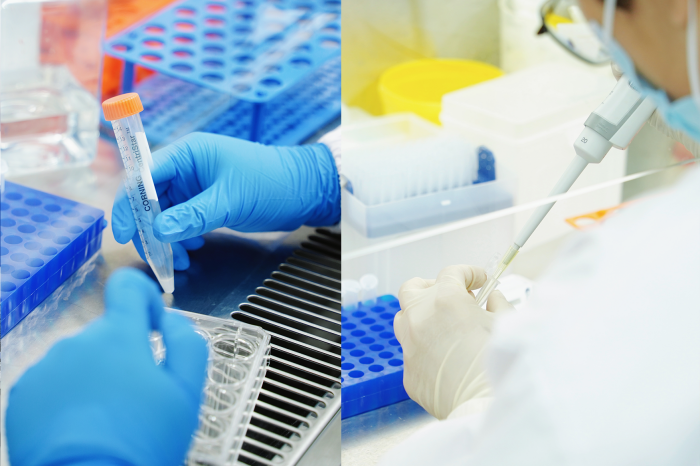
Although the study focuses on membrane materials rather than cryopreservation, its scientific methodology is highly relevant to biological sample preservation. Ice nucleation, crystal growth, unfrozen water, and local solute concentration are all factors that directly influence post-thaw cell viability and function — the very challenges CellStore addresses through its advanced cryopreservation media and technologies.

 

Commitment to Scientific Excellence

cellstore-chief-scientist-publishes-groundbreaking04.png


“At CellStore, we aim to advance fundamental ice science toward the high-quality preservation of cells, tissues, and other biological samples,” said Professor Wang. “ This publication is a testament to our ongoing commitment to understanding and controlling ice — because the future of medicine depends on what we preserve today.”


The research was conducted in collaboration with leading institutions and supported by the National Natural Science Foundation of China and the Strategic Priority Research Program of the Chinese Academy of Sciences.


Read the full paper: https://doi.org/10.1038/s41586-026-10765-4


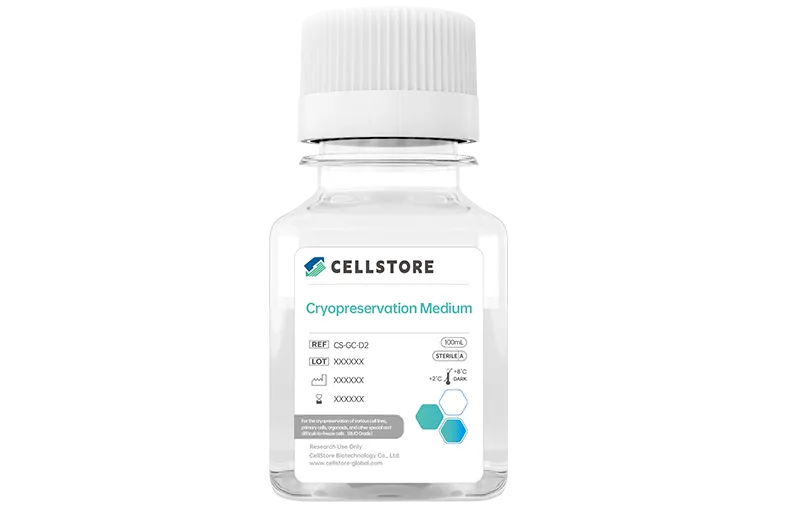
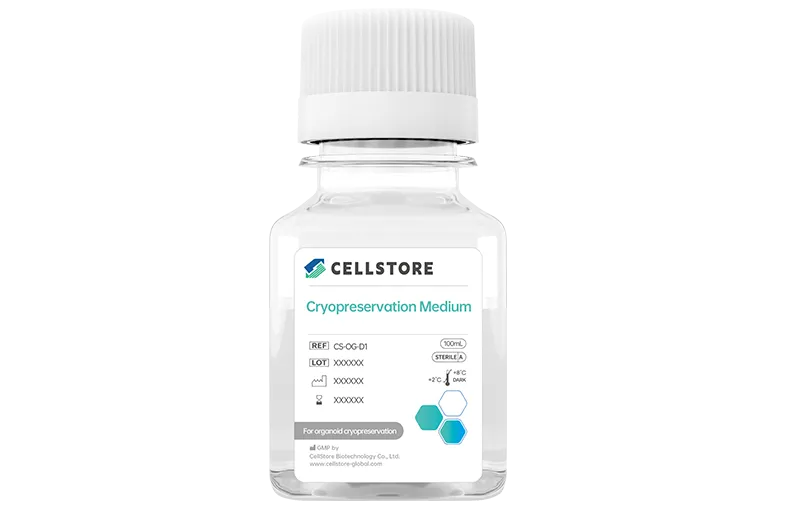
Related Cryopreservation Media
Quick Links
What Is Mesenchymal Cryopreservation Medium? NK Cell Culture Media Guide: Key Factors for NK Cell Expansion and Activity What Is Cryopreservation Media? Definition, Composition, and Applications Customer Case|CS-PM-D1 Enables High-Quality CBMC Cryopreservation Key Points for Evaluating Cryopreservation Effectiveness and Sample Transfer CellStore Stem Cell Cryopreservation Medium: Powering China's Stem Cell Therapy Revolution in 2025 Critical Considerations for Effective Cryopreservation of Cells and Tissues: from Experimental Design to Protocol Execution Reshaping the Microcosm of Life: Let 3D Models Say Goodbye to the "Frostbite" Era How to Freeze and Thaw Cells with Cell Freezing Medium? How to Choose the Right Tissue Culture Media? Cryopreservation Best Practices 8 Components of Tissue Culture Media Homemade freezing medium or commercial freezing medium? Simplifying PBMC Cryopreservation without Compromise — Application 1 Simplifying PBMC Cryopreservation: Direct Freezing of Whole Blood Application 2 How Does Cryopreservation Media Protect Cells During Freezing and Long-Term Storage? Cryopreservation of Embryos Advantages What Is Cryopreservation of Stem Cells and Is It Worth It? Does Cryopreservation Impact T Cell Viability and Therapeutic Efficacy? A Stable Freeze–Thaw Step Can Make All The Difference In Cd34⁺ Cell Workflows. Why Does “dead volume” Still Challenge Automated Cgt Manufacturing — And How Can We Design Around It Instead Of Fighting It? Case Sharing | Clinical Application: Performance Interpretation of CS-SC-D1 Cryopreservation Medium Technology Sharing | Rethinking CHO Cell Banking: Toxicity, Workflow Burden & Simpler Operations CS-DX-N2 Keeps >90% Of Cells Alive, With Markers Virtually Unchanged From Fresh What Happens to Cell Viability After 3–6 Months of Cryopreservation? Cryopreservation Challenges in iMSC Cell Therapy Workflows Cryopreservation for CAR-NK Cells: Functional Retention Matters Stability Under Extended 4°C Holding In Msc Manufacturing Post-Thaw Stability Under Room-Temperature Holding In Msc Manufacturing Beyond Viability: Evaluating PBMC Cryopreservation from a Post-Thaw Workflow Perspective Understanding PBMC Freezing and Culture New product launch — meet AirLite Cells need to be more than alive after thawing How to Cryopreserve Peripheral Blood Mononuclear Cells (PBMCs) Methods for Preparing and Using Cell Freezing Media What Are the Different Types of Tissue Culture Medium? Isolation, Freezing, and Thawing of PBMCs CellStore Q&A Series |Why Choose Commercial Cryopreservation Media Over Homemade Formulations How to Choose Xeno-Free Media for T Cell and NK Cell Culture What Is T Cell Culture Medium and How to Choose the Right Formula?
Email
lumy@cellstore-global.com
Tel
010-82170580
Address
5-101, Bldg. 10, No. 6 Dongsheng Science and Technology Park North St., Haidian Dist., Beijing, China.