
Email Us

Traditional PBMC workflows are complex: Whole blood → Ficoll separation → washing → resuspension → freezing

  • Time-consuming, labor-intensive, and prone to cell loss or activation.


  • CS-PM-D1 goes further: fully validated for direct whole blood freezing.

    ✔️ Mix whole blood 1:1 with CellStore PBMC cryomedium

    ✔️ Small volumes: direct storage at −80 °C

    ✔️ Large volumes: controlled-rate freezing

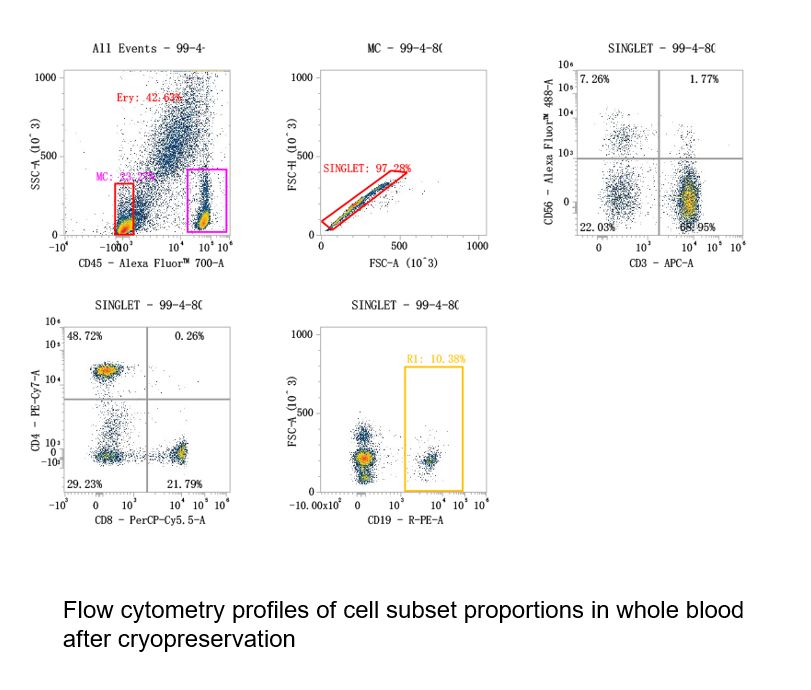
    ✔️ Post-thaw: no centrifugation needed, stain directly for flow cytometry


  • Validated by data

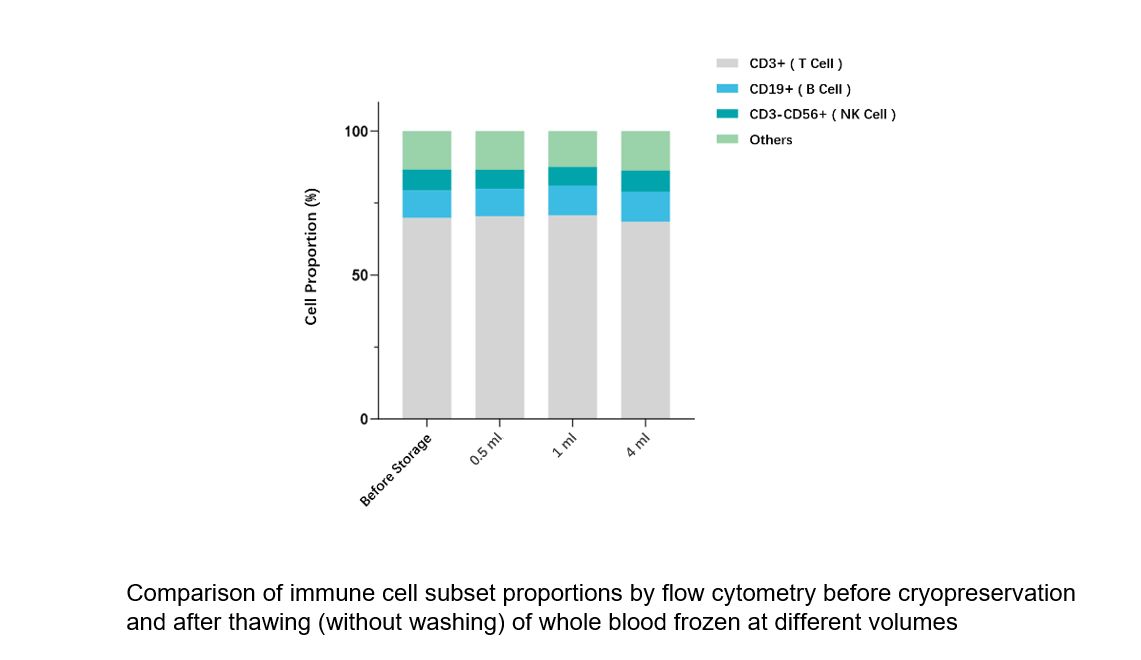
    After thawing, lymphocyte subsets (T, B, NK cells) and surface marker expression closely match results from freshly analyzed whole blood—across multiple volumes and conditions.


  • Fewer steps. Higher efficiency. More reproducible flow cytometry.


Sometimes, simpler really is better.


cs-pm-d1-1127_(1).webp

direct-freezing-of-whole-blood-application.jpgdirect-freezing-of-whole-blood-application-02.jpg


Related Cryopreservation Media
Quick Links
What Is Mesenchymal Cryopreservation Medium? Customer Case|CS-PM-D1 Enables High-Quality CBMC Cryopreservation Key Points for Evaluating Cryopreservation Effectiveness and Sample Transfer CellStore Stem Cell Cryopreservation Medium: Powering China's Stem Cell Therapy Revolution in 2025 Critical Considerations for Effective Cryopreservation of Cells and Tissues: from Experimental Design to Protocol Execution Reshaping the Microcosm of Life: Let 3D Models Say Goodbye to the "Frostbite" Era How to Freeze and Thaw Cells with Cell Freezing Medium? How to Choose the Right Tissue Culture Media? Cryopreservation Best Practices 8 Components of Tissue Culture Media Homemade freezing medium or commercial freezing medium? Simplifying PBMC Cryopreservation without Compromise — Application 1 Simplifying PBMC Cryopreservation: Direct Freezing of Whole Blood Application 2 How Does Cryopreservation Media Protect Cells During Freezing and Long-Term Storage? Cryopreservation of Embryos Advantages What Is Cryopreservation of Stem Cells and Is It Worth It? Does Cryopreservation Impact T Cell Viability and Therapeutic Efficacy? A Stable Freeze–Thaw Step Can Make All The Difference In Cd34⁺ Cell Workflows. Why Does “dead volume” Still Challenge Automated Cgt Manufacturing — And How Can We Design Around It Instead Of Fighting It? Case Sharing | Clinical Application: Performance Interpretation of CS-SC-D1 Cryopreservation Medium Technology Sharing | Rethinking CHO Cell Banking: Toxicity, Workflow Burden & Simpler Operations CS-DX-N2 Keeps >90% Of Cells Alive, With Markers Virtually Unchanged From Fresh What Happens to Cell Viability After 3–6 Months of Cryopreservation? Cryopreservation Challenges in iMSC Cell Therapy Workflows Cryopreservation for CAR-NK Cells: Functional Retention Matters Stability Under Extended 4°C Holding In Msc Manufacturing Post-Thaw Stability Under Room-Temperature Holding In Msc Manufacturing Beyond Viability: Evaluating PBMC Cryopreservation from a Post-Thaw Workflow Perspective Understanding PBMC Freezing and Culture New product launch — meet AirLite Cells need to be more than alive after thawing How to Cryopreserve Peripheral Blood Mononuclear Cells (PBMCs) Methods for Preparing and Using Cell Freezing Media What Are the Different Types of Tissue Culture Medium? Isolation, Freezing, and Thawing of PBMCs CellStore Q&A Series |Why Choose Commercial Cryopreservation Media Over Homemade Formulations
Email
lumy@cellstore-global.com
Tel
010-82170580
Address
5-101, Bldg. 10, No. 6 Dongsheng Science and Technology Park North St., Haidian Dist., Beijing, China.