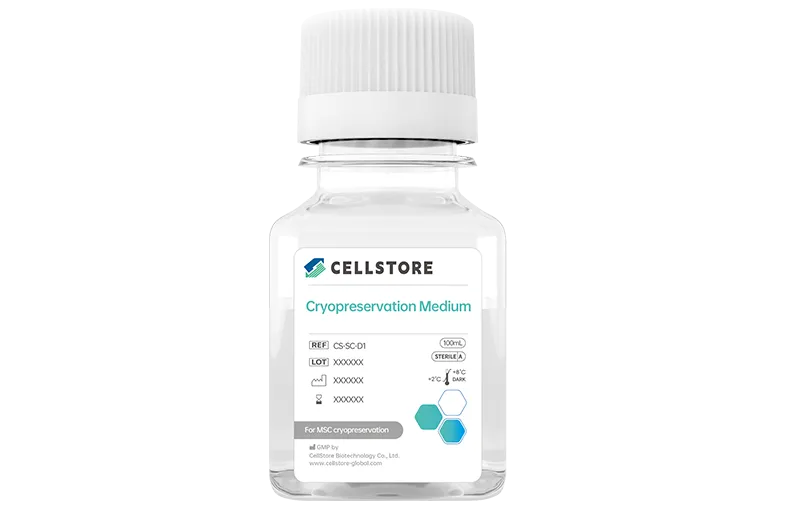

Cell freezing media should be prepared under sterile conditions and mixed with healthy cell suspensions at the recommended density. Cells should be frozen gradually at approximately 1°C per minute and stored at ultra-low temperatures or in liquid nitrogen. Proper thawing and cryoprotectant removal are equally important to maximize post-thaw viability and functionality.
In the rapidly evolving fields of cell therapy, regenerative medicine, and biobanking, effective cryopreservation is the cornerstone of success. Whether you're preserving primary immune cells for clinical trials, maintaining stem cell lines for research, or establishing a long-term biobank, the methods for preparing and using cell freezing media directly determine post-thaw recovery rates, cell functionality, and experimental reproducibility. This complete guide explores every critical aspect of the cryopreservation process. From understanding the science behind cellular damage to step-by-step protocols and emerging technologies like Ice-Control Cryopreservation, you'll gain actionable insights to achieve consistently high cell viability and functionality.
Cryopreservation subjects cells to extreme conditions that can cause irreversible damage without proper protection. During freezing, water in and around cells can form ice crystals that puncture delicate membranes and organelles. As temperatures drop, cells experience osmotic shock as water exits rapidly, leading to dehydration and shrinkage. Upon thawing, the reverse process can cause swelling and rupture. Additional threats include membrane rupture from ice expansion, oxidative stress from reactive oxygen species generated during freeze-thaw cycles, and toxicity from cryoprotectants if not managed correctly. High-quality cell freezing media mitigate these risks by controlling ice formation, maintaining osmotic balance, stabilizing membranes, and supporting cellular recovery.
Cryopreservation media is a specialized solution designed to protect cells from freezing-related damage during storage at ultra-low temperatures. These formulations create a protective microenvironment that minimizes physical and chemical stresses throughout the freeze-thaw cycle. Key components typically include:
Cryoprotectants: Prevent ice crystal formation by lowering the freezing point and facilitating controlled dehydration.
Buffer Systems: Maintain physiological pH during temperature shifts.
Electrolytes: Support osmotic balance to prevent cell shrinkage or swelling.
Nutrients: Provide energy and building blocks to aid post-thaw recovery.
Ice-Control Materials: Advanced additives that regulate freezing behavior more precisely than traditional agents.
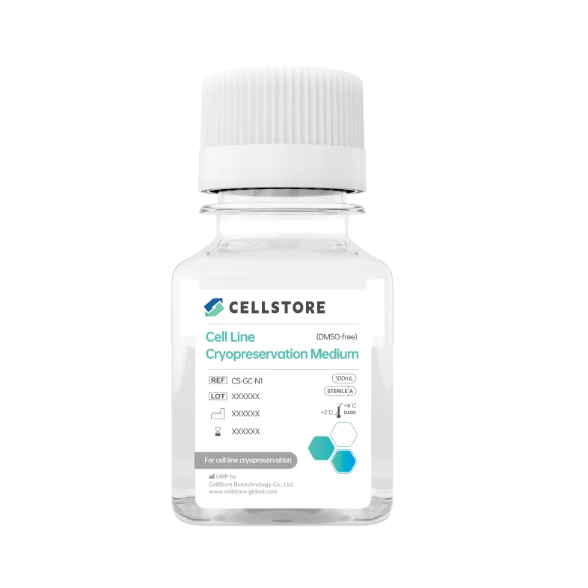
The industry has shifted from traditional DMSO-based media toward next-generation solutions. DMSO-free cryopreservation media, serum-free freezing medium, and animal-origin free cryopreservation solutions are gaining traction, particularly in clinical and GMP environments, due to reduced toxicity, lower regulatory hurdles, and improved consistency.
Only healthy, high-quality cells should enter the cryopreservation pipeline. Target populations with viability exceeding 90%, ideally harvested during the logarithmic growth phase when metabolic activity is optimal. Avoid cells from over-confluent cultures, as they may exhibit stress responses, reduced proliferative capacity, or senescence markers that compromise recovery. Perform comprehensive characterization including morphology assessment, functional assays relevant to your application (e.g., cytokine production for immune cells), and mycoplasma testing. This upfront investment significantly boosts long-term success rates.
| Cell Type | Recommended Density |
|---|---|
| PBMC | 5–10 × 10⁶/mL |
| T Cells | 1–20 × 10⁶/mL |
| NK Cells | 5–20 × 10⁶/mL |
| MSCs | 1–5 × 10⁶/mL |
| Cell Lines | 1–10 × 10⁶/mL |
Density optimization requires empirical testing for specific cell types and applications, as overcrowding can lead to nutrient depletion while under-density may reduce protective cell-cell interactions during freezing.
GMP-compliant environments are essential for cell therapy manufacturing and clinical research. Use Class II biosafety cabinets, sterile consumables, and validated SOPs. For biobanking, implement rigorous chain-of-custody documentation to ensure traceability and regulatory compliance.
Begin by assembling and pre-cooling all necessary equipment: cryovials, pipettes, freezing containers, and media. Pre-chilling reduces thermal shock when cells are introduced to the freezing solution. Work in a cold environment (4°C) where possible to minimize exposure time at room temperature.
Harvest cells using gentle dissociation methods to preserve membrane integrity. Centrifuge at appropriate speeds (typically 300-500g for 5-10 minutes) to pellet cells without compaction damage. Carefully aspirate supernatant and resuspend in a small volume of chilled culture medium or buffer before counting. Accurate cell counting using automated counters or hemocytometers ensures precise density adjustment.
This step requires precision and gentleness. Add the pre-chilled freezing media dropwise or in equal volumes while gently swirling the tube to achieve homogeneous mixing. Avoid vigorous pipetting or vortexing, which can generate shear forces and foam, both detrimental to cell health. Limit exposure time to cryoprotectants at room temperature to under 10-15 minutes.
Aliquot the cell-media mixture into pre-labeled, sterile cryovials using wide-bore pipettes. Standard fill volumes are 0.5-1.0 mL per vial. Labeling is critical: include cell type, passage number, date, operator initials, and any unique identifiers. Use cryogenic-grade labels resistant to ultra-low temperatures and solvents.
Place vials in a controlled-rate freezing device or isopropanol chamber designed to achieve approximately 1°C per minute cooling. This rate allows extracellular ice to form first, drawing water out of cells osmotically and preventing lethal intracellular ice crystals.
After overnight cooling at -80°C, transfer to long-term storage. Advanced systems provide programmable profiles tailored to specific cell types.
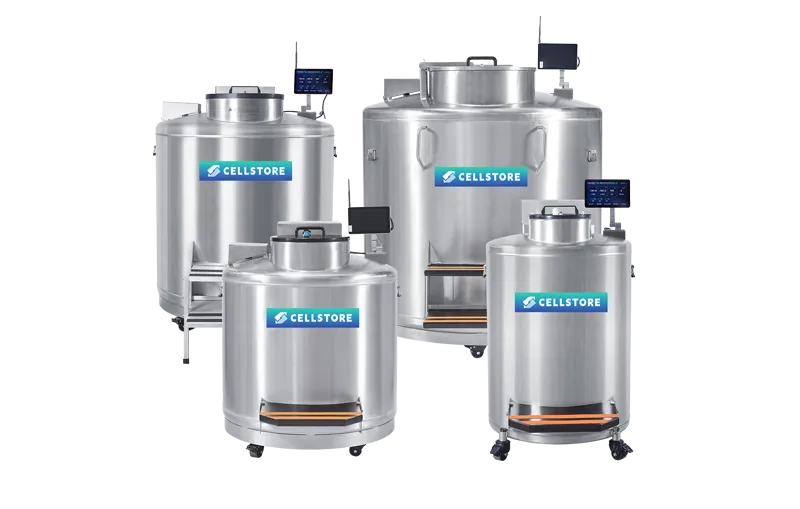
Storage conditions dramatically influence viability over months or years. Vapor-phase liquid nitrogen minimizes cross-contamination risks compared to liquid-phase immersion, though both maintain temperatures below the glass transition point of water (-135°C to -150°C).
| Storage Method | Temperature | Recommended Duration |
|---|---|---|
| -80°C Freezer | -80°C | Short-term (weeks to months) |
| LN2 Vapor | -150°C to -180°C | Long-term (years) |
| LN2 Liquid | -196°C | Ultra-long-term (decades) |
Thaw vials rapidly in a 37°C water bath with gentle agitation until only a small ice sliver remains (typically 1-2 minutes). Rapid thawing prevents recrystallization of small ice crystals that could damage cells during warming.
Immediately transfer thawed cells to pre-warmed culture medium (10-20x volume) and centrifuge gently to remove residual cryoprotectants. This step is crucial for minimizing toxicity, especially with DMSO-containing media.
| Assessment | Method |
|---|---|
| Viability | Trypan Blue Exclusion or Automated Counter |
| Cell Count | Automated Counter |
| Functionality | Cell-specific assays (proliferation, cytokine release, differentiation potential) |
Allow cells to recover in optimal culture conditions for 24-48 hours before functional testing.
| Mistake | Consequence |
|---|---|
| Freezing unhealthy cells | Low viability and poor functionality |
| Incorrect freezing rate | Ice crystal damage |
| Repeated freeze-thaw cycles | Cumulative cell death |
| Improper labeling | Sample loss or mix-ups |
| Extended DMSO exposure | Toxicity and reduced recovery |
Avoiding these pitfalls through standardized protocols dramatically improves outcomes.
| Application | Recommended Features |
|---|---|
| Immune Cells | Serum-free, high viability for T/NK/PBMC |
| Stem Cells | High recovery, maintains pluripotency |
| Cell Therapy | GMP-grade, xeno-free |
| Cell Lines | Cost-effective, reliable |
| Reproductive Cells | Animal-origin free |
| Tissue Samples | Enhanced penetration |
The field is advancing toward fully chemically defined, DMSO-free solutions that eliminate toxicity concerns while maintaining or exceeding the performance of traditional media. Ice-Control Cryopreservation Technology represents a breakthrough, using specialized materials to more precisely regulate ice nucleation and crystal growth. Automation in biobanking, integration with closed-system manufacturing for cell therapies, and AI-optimized protocols are set to transform the industry, improving scalability and consistency for clinical applications.
CellStore Biotechnology Co., Ltd. is a specialized manufacturer of cryopreservation media and biological sample preservation solutions. With more than a decade of research and innovation, CellStore has developed a proprietary Ice-Control Cryopreservation Technology platform that significantly improves cell survival and post-thaw recovery across diverse biological applications. Unlike conventional freezing media, CellStore offers DMSO-free, serum-free, protein-free, and animal-origin-free cryopreservation solutions formulated with ingredients compliant with the PRC Pharmacopoeia. This approach helps researchers and biopharmaceutical manufacturers reduce regulatory and safety concerns while achieving superior performance.
| Product Category | Applications |
|---|---|
| For Immune Cells | T Cells, NK Cells, PBMC |
| For Stem Cells | MSC, iPSC, HSC |
| For Cell Lines | Research and Biobanking |
| For Tissue | Tissue Preservation |
| For Assisted Reproductive Technology | Embryos and Reproductive Cells |
Proprietary Ice-Control Cryopreservation Technology
DMSO-Free Solutions Available
Serum-Free & Animal-Origin-Free Formulations
GMP Manufacturing Facilities
Customized Cryopreservation Development Services
Trusted by Hospitals, CROs, and Research Institutes Worldwide
 Cryopreservation Media