
In the golden age of biomedicine, organoids are replicating the complex structure and function of human organs with unprecedented precision. These "microcosms of life" beating in petri dishes have become revolutionary tools in drug development, precision medicine, and regenerative medicine. In April of this year, the US FDA announced the gradual discontinuation of animal testing; in July, the European Union declared that by 2026, animal testing would be phased out. This not only marks a historic shift in global scientific research from animal models to "human biological models", but also provides a boost to the development of organoid technology.
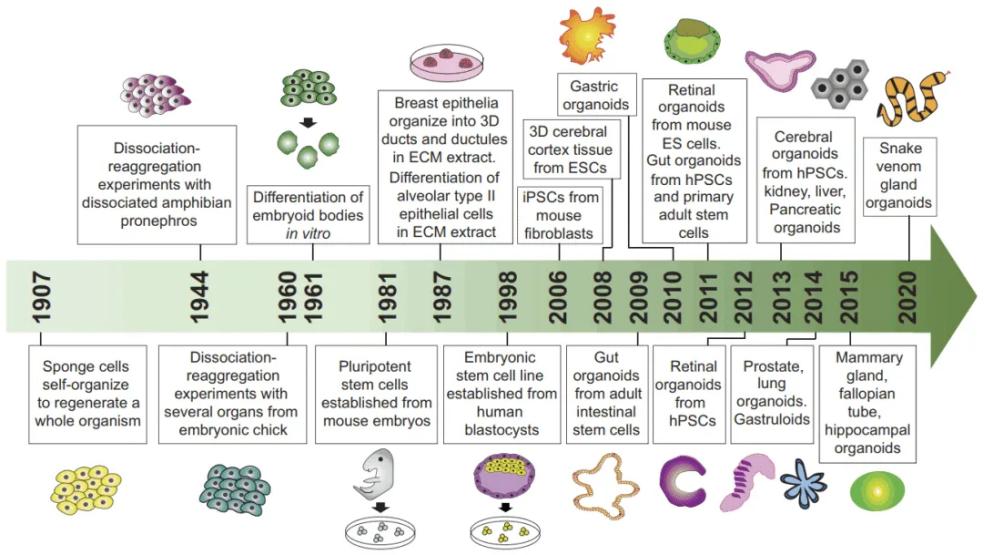
The development of organoid technology dates back to the early 20th century. In 1907, H. V. Wilson, 44-year-old professor at the University of North Carolina conducted a groundbreaking experiment, discovering that mechanically separated sponge cells could spontaneously reassemble into fully functional new organisms. This landmark research result was officially published in 1910. A century later, in 2009, Dutch scientist Hans Clevers' team successfully cultured intestinal organoids with a crypt-villus structure for the first time, ushering in a new era of self-organizing 3D culture.
Organoid technology has achieved several significant breakthroughs in clinical translation:
"Drug Surrogates" for Precision Medicine: Patient-Derived Organoids (PDOs) are used for personalized drug sensitivity testing, guiding clinical treatment and significantly improving efficacy for cancer patients.
"Accelerator" for New Drug Development: High-throughput efficacy and toxicity testing of organoids more accurately predicts human responses than traditional 2D cell and animal models, significantly reducing R&D failure rates and development costs.
"Decipherers" of Disease Mechanisms: Organoids have been used to model genetic disorders and infectious diseases (such as the impact of COVID-19 on respiratory organoids), enabling in-depth investigation into pathophysiological mechanisms.
Hope for Regenerative Medicine: As a potential source of transplant tissue or tissue engineering scaffold, organoids are exploring the potential for repairing or replacing damaged organs.
Currently, numerous clinical trials based on organoids are underway worldwide, covering areas such as drug sensitivity testing and transplant therapies. With the maturation of automated culture and organ-on-a-chip integration technologies, organoids are moving from the laboratory to industrialization, becoming a crucial bridge between basic research and clinical translation. In 2024, the FDA included organoid models in drug development guidelines, marking a critical step towards standardized application of this technology.
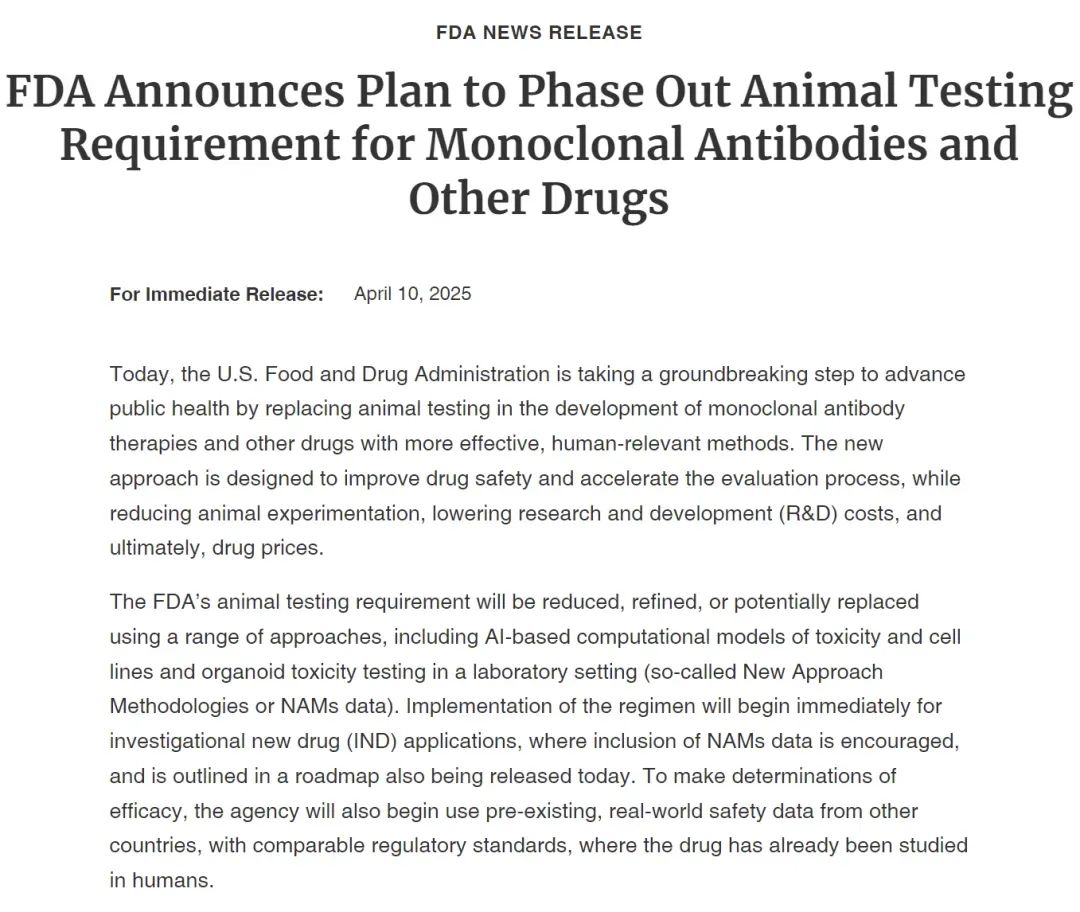
Organoid technology is reshaping various domains of biomedicine at an astonishing pace. In drug development, it significantly enhanced drug screening efficiency and the accuracy of safety assessments through highly biomimetic tumor and liver organoid models. In precision medicine, patient-derived organoids (PDOs) have successfully guided personalized treatments for cancer and rare diseases. In genetic disease research, organoid models for conditions such as cystic fibrosis and autism have elucidated disease mechanisms and accelerated drug development. And at the forefront of regenerative medicine, intestinal, liver, and kidney organoids have demonstrated potent potential for tissue repair. Organoids are evolving toward multi-organ interconnected systems (as evidenced by 2022's Science "Organ-on-a-Chip" research) and intelligent cultivation. Although challenges related to standardization and scalability remain, organoid technology is undoubtedly reshaping the biomedical research landscape, offering unprecedented possibilities for human disease investigations, drug development, and regenerative therapies.
CellStore Organoid Cryopreservation Fluid: Protecting the Blueprint of Life
While organoid technology is experiencing significant growth, it also faces some substantial challenges. One of the most pressing issues is the freezing and preservation of organoids. When scientists attempt to pause these valuable models by cryopreserving them, they encounter the risk of structural collapse and functional loss in the carefully constructed micro-organs. The three-dimensional complexity of organoids makes cryopreservation far more difficult than that of regular cells. Improper cryopreservation protocols can lead to the disintegration of organoids' delicate structure (e.g., crypt collapse and loss of polarity), widespread apoptosis of core cell populations, irreversible damage to key physiological functions (such as secretion, metabolism, and drug response), and severe batch-to-batch variability.
CellStore Biotechnology has addressed these challenges by developing an innovative controlled freezing technology. Our chemically defined, serum-free, and protein-free cryopreservation medium for organoids (CS-OG-D1) provides a reliable solution for preserving a wide range of organoid models. This product offers a truly dependable cryopreservation method for organoids, supporting cutting-edge medical research with an efficient and reproducible preservation system.
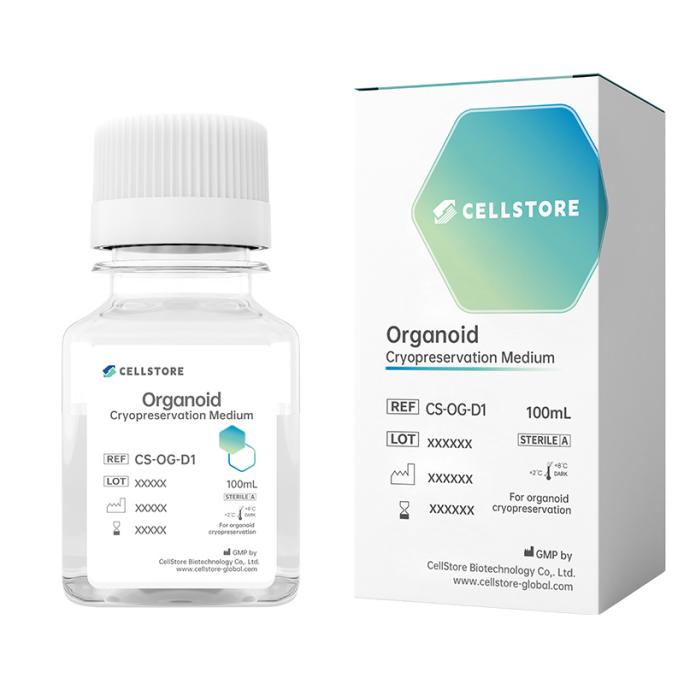
l GMP-compliant management with fully PRC Pharmacopoeia ingredients
l Chemically defined, serum-free, protein-free and animal-free
l Achieve high efficiency of normal tissue organoid and tumor organoid cryopreservation
l Organoids exhibit robust growth and proliferation after thawing;
l User-friendly operation supports direct freezing without the need for programmed cooling.

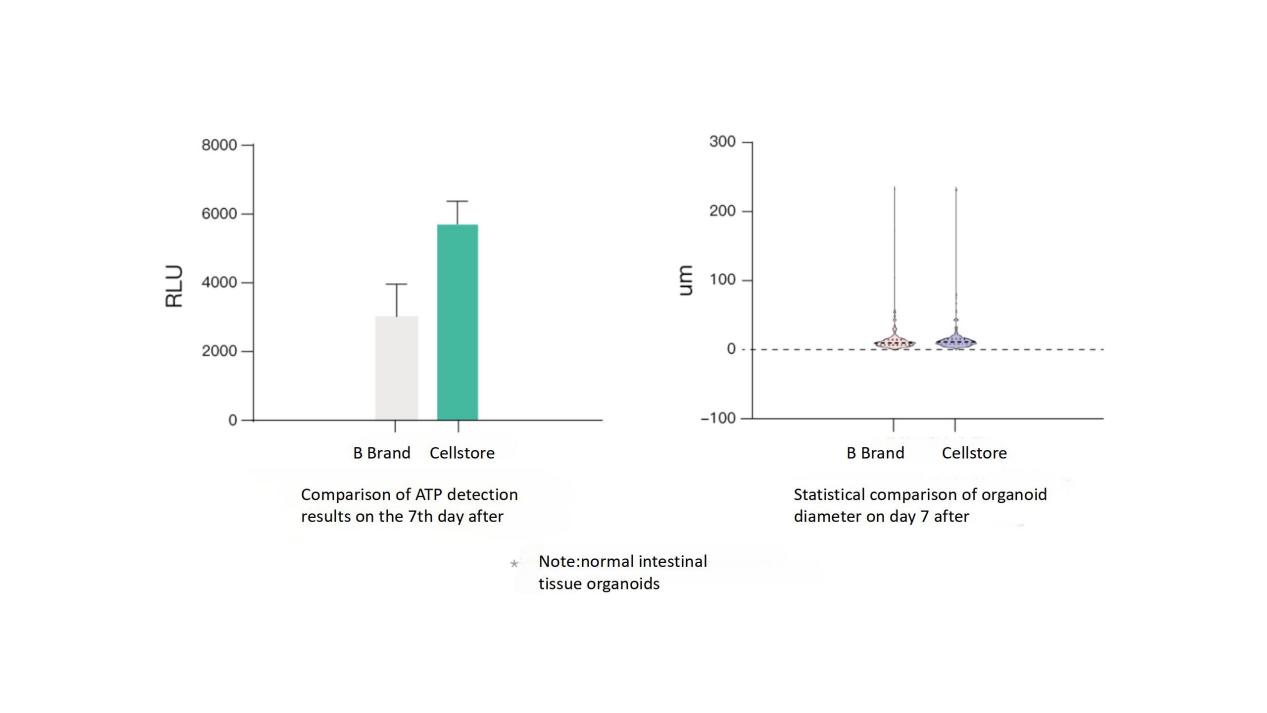
The activity of organoids preserved in cryopreservation solution was better than that of imported brands after freezing and thawing.
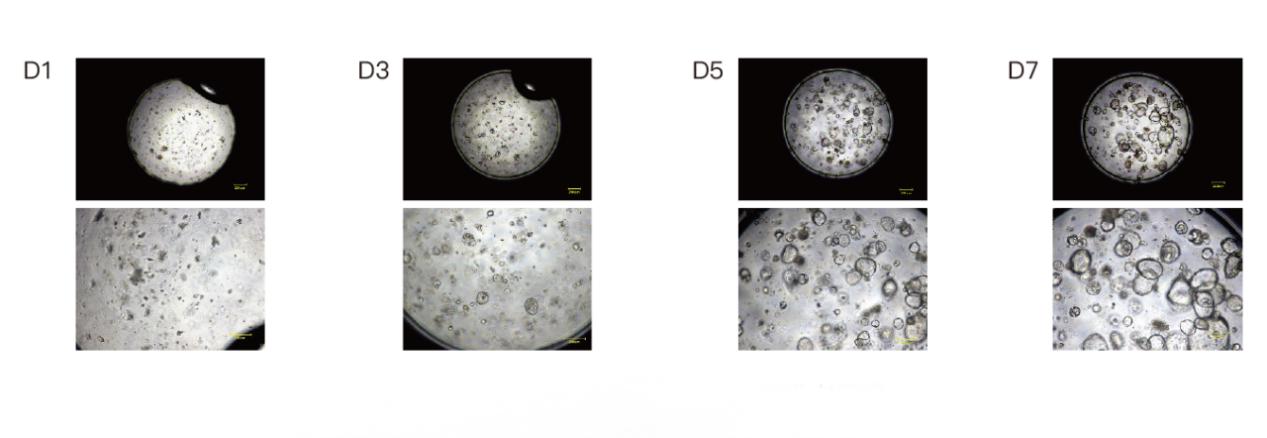
Growth of intestinal cancer organoids after cryopreservation and resuscitation at different times.
If you are interested in this cryopreservation fluid, please contact us.