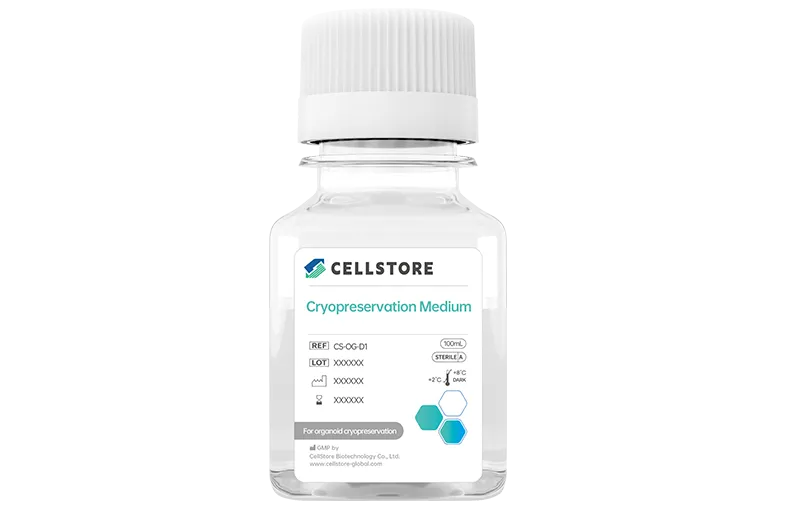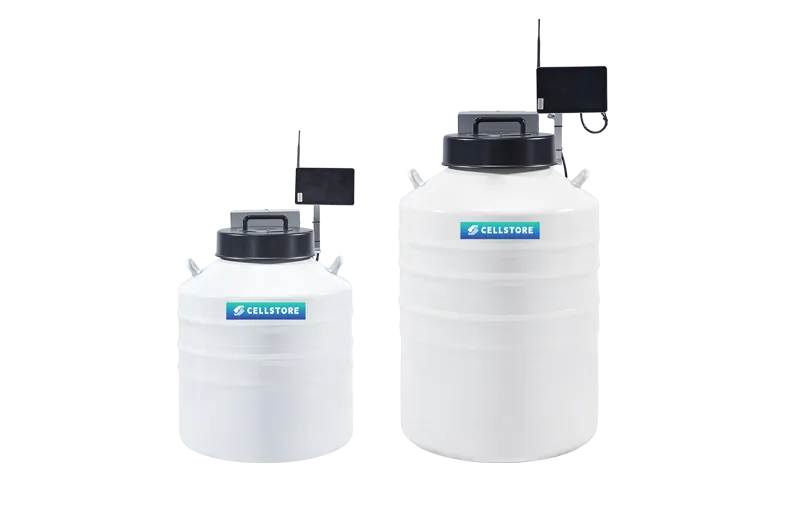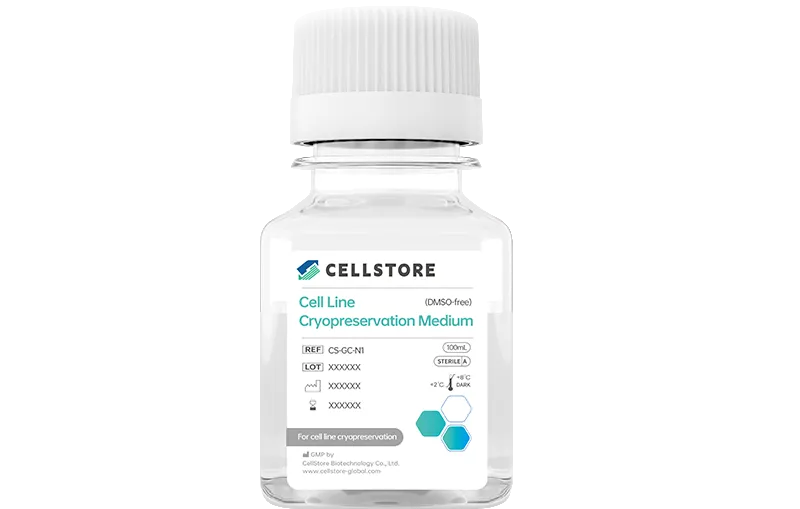

Cryopreservation is a widely used method for the long-term storage of cells, including human peripheral blood mononuclear cells (PBMCs) isolated from whole blood, peripheral blood, or leukapheresis products. In this process, cells are suspended in a cryopreservation medium, cooled to very low temperatures, and stored under liquid nitrogen conditions for future use. After thawing, cryopreserved PBMCs can be used in downstream applications such as immune profiling, functional assays, and cell subset isolation.
Choosing the right cryopreservation medium, cell concentration, and freezing method is essential for maintaining cell viability and function after thawing. The following protocol outlines the recommended workflow for preserving purified PBMCs using Cellstore PBMC Cryopreservation Medium.
Cellstore PBMC Cryopreservation Medium is a serum-free and animal component-free freezing medium containing 10% DMSO. It is designed to provide a stable and protective environment for cells during freezing, storage, and thawing.
Before starting, disinfect the outside of the container with 70% ethanol or isopropanol and prepare cryogenic vials in advance. Collect the mononuclear cells from peripheral blood or cord blood, then centrifuge at 500 × g for 5 minutes at room temperature. Carefully remove the supernatant.
Resuspend the cell pellet in a suitable solution, such as saline, culture medium, or DPBS, and perform cell counting and viability assessment. A cell viability of over 90% before cryopreservation is preferred. After evaluation, centrifuge again at 500 × g for 5 minutes at room temperature and remove the supernatant completely.
Gently resuspend the pellet with Cellstore PBMC Cryopreservation Medium to achieve a final cell density of 1 × 10^6 to 1 × 10^8 cells/mL. The recommended freezing volume is 0.5 to 1.5 mL per tube. If a cryopreservation bag is used for large-volume freezing, please contact the technical team for a programmed cooling curve.
For some applications, autologous plasma, serum, or HSA may be added according to experimental requirements to improve post-thaw viability. After filling the cryovials, transfer them to a -80°C freezer. For long-term storage, move the frozen samples to liquid nitrogen after 12 hours.
A traditional serum-containing freezing medium can also be used for PBMC cryopreservation. Before beginning, all media should be chilled. If FBS is not appropriate for the intended application, a serum-free cryopreservation medium should be selected instead.
To prepare the freezing solution, a 20% DMSO solution in FBS should be made and kept on ice. Pure DMSO should not be placed directly on ice, as it may crystallize. Cryogenic vials should be labeled in advance. PBMCs should be prepared as a single-cell suspension and centrifuged at 300 x g for 10 minutes to obtain a pellet. The supernatant should be removed carefully, leaving a small amount of medium behind to avoid disturbing the pellet.
The cells should then be resuspended in cold FBS at a concentration of 1 to 20 x 10^6 cells/mL and kept on ice. Next, the cell suspension should be mixed gently with the 20% DMSO in FBS solution at a 1:1 ratio. This results in a final freezing medium containing 10% DMSO and 90% FBS, with a final cell concentration of 0.5 to 10 x 10^6 cells/mL. Approximately 1 mL of the mixture should then be transferred quickly into each cryogenic vial.
The filled vials should be placed immediately into an isopropanol freezing container and stored in a -80°C freezer overnight. Cells should not be left at room temperature in the cryopreservation medium, so they should remain on ice and be transferred quickly. For long-term storage, the frozen vials should be moved to liquid nitrogen below -135°C, while minimizing temperature fluctuations by using dry ice during transfer. As with the first method, long-term storage at -80°C is not recommended.

 Cryopreservation Media