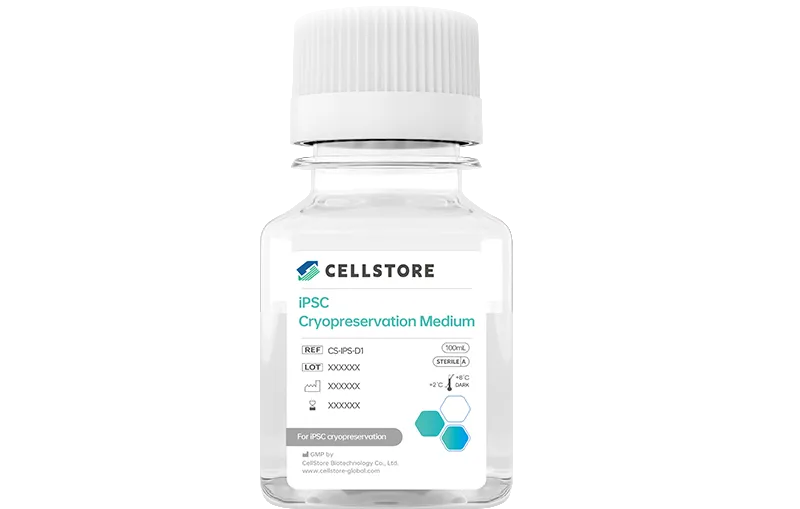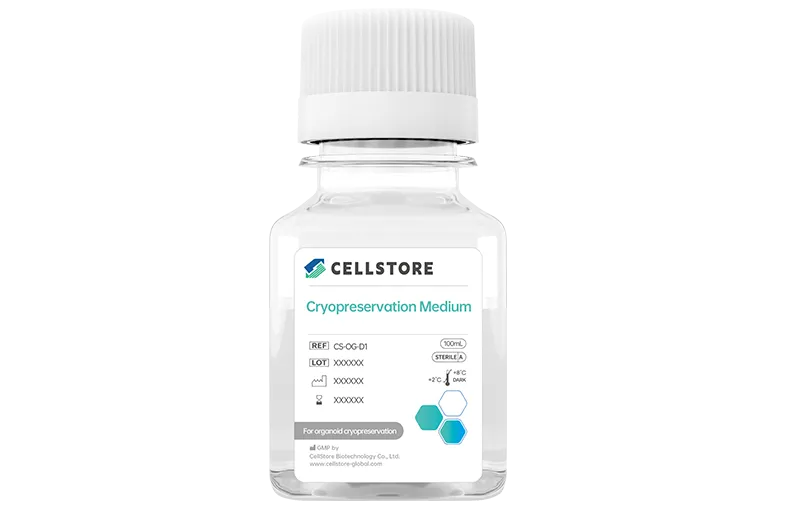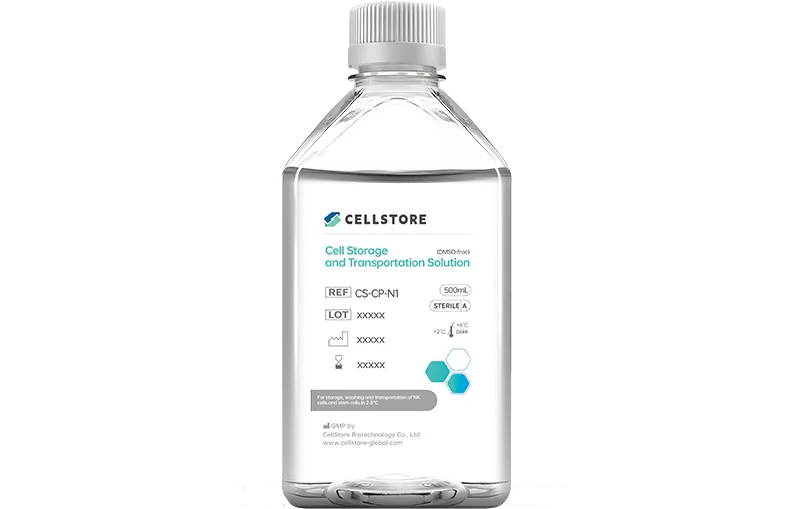

Mesenchymal cryopreservation medium is a specialized freezing solution designed to preserve mesenchymal stem/stromal cells (MSCs) at ultra‑low temperatures while maintaining high post‑thaw viability and functional potency.
Unlike generic “home‑brew” freezing recipes, optimized MSC media are formulated to minimize ice‑crystal damage, osmotic shock, and cryoprotectant toxicity, which are the main causes of cell death and phenotype drift during freezing and thawing.
For cell‑therapy developers and stem‑cell banks, the choice of cryopreservation medium has a direct impact on batch consistency, long‑term stability, and ultimately clinical outcomes.
This is why many groups are moving from serum‑containing lab mixes to serum‑free, xeno‑free, GMP‑grade commercial products.
Cryopreservation is now a cornerstone technology in regenerative medicine because it enables long‑term, on‑demand access to living cell products.
For mesenchymal stem cells, it supports everything from early‑stage research to large‑scale allogeneic therapy manufacturing and global logistics.
Key reasons MSC cryopreservation matters:
It stabilizes supply: cells can be manufactured in controlled batches, tested, then stored until needed, rather than produced “just‑in‑time.”
It supports global distribution: cryopreserved MSCs can be shipped worldwide while maintaining acceptable viability and potency.
It does not necessarily compromise efficacy: systematic reviews of preclinical studies have found no consistent, clinically relevant loss of in vivo efficacy when comparing cryopreserved versus freshly cultured MSCs in animal models of inflammation.
Because MSC‑based products are moving from bench to bedside, the cryopreservation medium is no longer a minor technical detail; it becomes part of the regulated product ecosystem.
An effective mesenchymal cryopreservation medium balances three competing needs: protection against freezing injury, low toxicity, and regulatory compatibility.
Typical design elements include:
Cryoprotectants: compounds such as dimethyl sulfoxide (DMSO), glycerol, or other agents reduce ice‑crystal formation and lower the solution’s freezing point.
Buffers and salts: these stabilize pH and osmolarity during freezing and thawing, helping cells tolerate changing temperatures and solute concentrations.
Proteins or protein substitutes: serum or albumin can offer additional membrane protection, though many newer media replace animal proteins with defined, non‑animal components.
Antioxidants and stabilizers: molecules like ascorbic acid or tocopherol can mitigate oxidative stress that occurs during freeze–thaw cycles.
Modern MSC cryopreservation solutions increasingly adopt serum‑free and xeno‑free formulations to reduce variability, contamination risk, and regulatory hurdles for clinical applications.
For many years, laboratories used simple formulations such as “10% DMSO + 20% fetal bovine serum (FBS) in basal medium” for MSC freezing.
While inexpensive and familiar, these home‑brew mixes suffer from batch‑to‑batch variability and introduce poorly defined animal components that complicate clinical translation.
By contrast, commercial cryopreservation media:
Offer defined, serum‑free or xeno‑free formulations, improving reproducibility across sites and studies.
Are often manufactured under ISO or cGMP‑compliant conditions, with quality controls for endotoxins, sterility, and stability.
May include regulatory support, such as Drug Master File (DMF) filings with agencies, to streamline product registration and clinical submissions.
These advantages make commercial MSC cryopreservation media increasingly attractive for biobanks, CDMOs, and therapy developers who need both performance and regulatory readiness.
CellStore specializes in cryopreservation media for biological samples, with a dedicated line of stem cell freezing media designed for MSCs, iPSCs, and neural cells.
Their stem cell freezing media are positioned as ISO‑certified, serum‑free, and ready‑to‑use solutions aimed at reliable stem‑cell storage for demanding applications.
Key positioning points from the CellStore stem‑cell product page and related materials include:
Validated on MSCs from multiple sources: their primary validation used bone‑marrow and umbilical‑cord‑derived MSCs, with customers also successfully preserving amniotic epithelial stem cells and dental pulp stem cells.
Broad performance claims: they report consistently higher post‑thaw viability compared with unspecified competitor solutions, and have confirmed stable viability after more than 12 months in cryostorage.
Serum‑free and xeno‑free: the media rely on pharmacopeia‑grade salts and proprietary ice‑control/crystal‑inhibiting technology, without animal proteins or DMSO according to their own description.
Although detailed formulations are proprietary, the overall design reflects current industry trends toward defined, animal‑component‑free media aligned with clinical and regulatory expectations.
According to CellStore, their stem cell cryopreservation media are validated primarily for bone‑marrow‑derived and umbilical‑cord‑derived MSCs, and have also been used successfully for additional stem‑cell types.
These include amniotic epithelial stem cells and dental pulp stem cells, which often require robust protection to maintain niche‑specific properties after thawing.
Typical use scenarios include:
MSC‑based research programs that need consistent freezing performance across different donors and tissues.
Translational projects focusing on cord‑tissue and dental‑pulp stem cells, where long‑term cryostorage under serum‑free, xeno‑free conditions is essential for downstream regulatory acceptance.
By positioning the same media across multiple stem‑cell types, CellStore aims to simplify platform development for organizations working with diverse cell sources.
Long‑term viability and functional stability are central performance metrics for any mesenchymal cryopreservation medium.
Cryopreserved MSCs should retain not only membrane integrity but also their immunomodulatory and differentiation capabilities after thawing.
In CellStore’s own claims:
Their protocol “consistently achieves higher viability than competitors’ solutions,” although specific numerical benchmarks are not publicly detailed.
They report confirmed viability after more than 12 months in cryostorage, with “no observed degradation” over that time frame.
These statements are consistent with broader literature showing that well‑optimized cryopreservation conditions can sustain MSC viability and potency for extended periods when stored in liquid nitrogen.
However, any group adopting these media would still need to run their own comparative viability, phenotype, and potency assays to verify performance under project‑specific conditions.
A major theme in modern cryopreservation is the move away from serum and animal‑derived components.
Serum‑free and xeno‑free MSC freezing media reduce the risk of adventitious agents, immunogenic responses, and regulatory complexity.
CellStore’s stem cell cryopreservation media are described as:
Serum‑free and xeno‑free, using pharmacopeia‑grade salts and proprietary ice‑control ingredients instead of animal proteins.
Free of DMSO according to the product text, which explicitly notes that the medium contains no animal proteins or DMSO and instead relies on crystal‑inhibitor technology.
In parallel, the scientific literature has increasingly examined low‑DMSO and DMSO‑free approaches for MSC preservation, exploring sugars, polyols, and other protectants as alternatives.
These strategies are attractive for clinical applications because DMSO can cause infusion‑related side effects and requires careful removal during thawing.
For organizations developing MSC‑based products, regulatory compatibility of the cryopreservation medium is as important as its biophysical performance.
Regulators expect consistent, traceable, and well‑controlled materials throughout the manufacturing process.
CellStore emphasizes:
ISO‑related quality systems and GMP‑compliant manufacturing, along with stringent endotoxin and pyrogen testing.
Alignment with therapeutic applications, which implies that their media and documentation are designed to support clinical‑grade workflows, even though end‑users must still validate them in their own regulatory context.
This mirrors broader industry best practices, where cGMP manufacturing, documented composition, and, where applicable, DMF filings are used to streamline regulatory submissions for cell‑therapy products.
When selecting a cryopreservation medium for MSCs, users should evaluate both technical and business criteria.
Key questions include:
Target application: is the product intended for basic research, preclinical studies, or clinical therapy? This will influence whether research‑use‑only or GMP‑grade media are appropriate.
Cell types and sources: does the medium support the specific MSC source (e.g., bone marrow, cord tissue, adipose, dental pulp), and are there validation data or case studies to support this?
Formulation and safety: is the medium serum‑free, xeno‑free, and DMSO‑containing or DMSO‑free, and how does that align with the project’s safety and regulatory constraints?
Supply and documentation: does the supplier provide robust quality documentation, batch‑to‑batch consistency, and long‑term supply assurance?
In this context, CellStore’s stem cell freezing media appeal to teams looking for serum‑free, xeno‑free, DMSO‑free solutions that are already positioned for MSC applications and supported by an ISO/GMP manufacturing framework.
In a typical MSC‑based program, a stem cell freezing medium from CellStore would be integrated at the end of the expansion phase:
MSC expansion and characterization: cells from bone marrow, umbilical cord, or other sources are expanded under defined culture conditions and characterized for identity, purity, and potency.
Preparation for freezing: cells are harvested, counted, and formulated at a defined concentration in CellStore’s stem cell cryopreservation medium.
Controlled‑rate freezing and storage: vials are cooled at a controlled rate (often around 1 °C per minute using appropriate devices) before long‑term storage in liquid nitrogen.
Thawing and re‑qualification: on demand, vials are thawed, washed if needed, and cells are re‑assessed for viability, phenotype, and functional assays before preclinical or clinical use.
By standardizing the freezing step with a dedicated medium, organizations aim to reduce variability between batches, sites, and time points.
The field of MSC cryopreservation is rapidly evolving, with several promising directions under active investigation.
Current trends include:
Non‑toxic cryoprotectants: delivering non‑penetrating agents such as trehalose into MSCs using technologies like ultrasound and microbubbles, aiming to reduce or eliminate DMSO while maintaining high viability.
Advanced ice‑control strategies: leveraging proprietary crystal‑inhibiting technologies, similar in concept to what CellStore describes, to minimize intracellular ice formation and long‑term cryodamage.
Integrated logistics solutions: pairing optimized media with smart packaging and cold‑chain monitoring to support global deployment of MSC‑based therapies.
As clinical pipelines mature, demand will likely grow for serum‑free, xeno‑free, and potentially DMSO‑free MSC cryopreservation media that combine strong biological performance with robust regulatory and supply‑chain support—exactly the niche companies like CellStore are targeting.