


Inquiry
For more information about CellStore Biotechnology or our products, feel free to contact us.
- Partnering with us?
- Want to become our distributor?
- Some feedback that you have?


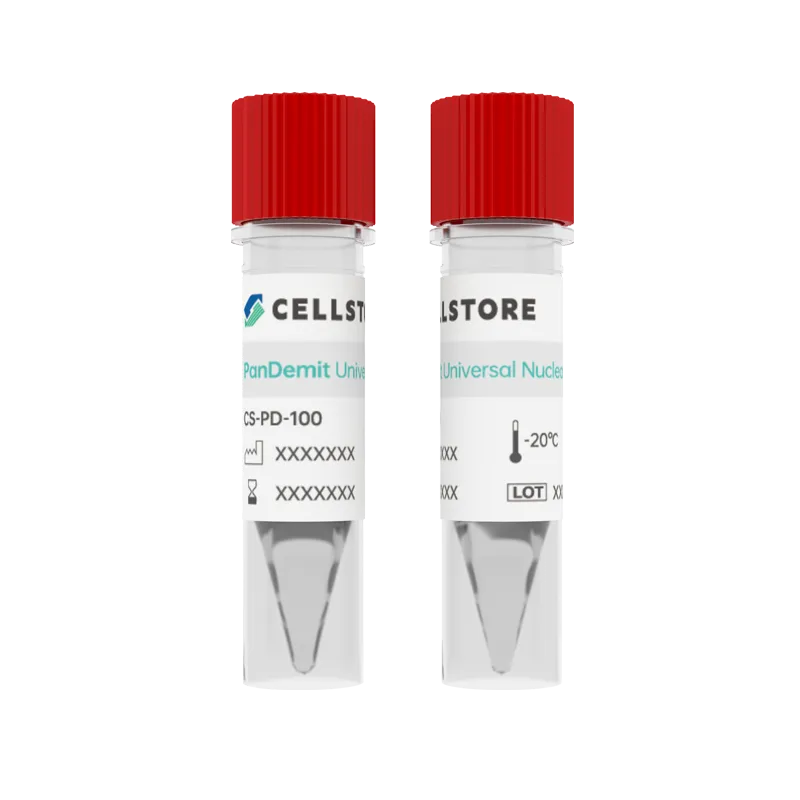
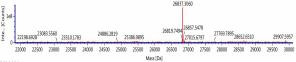
This product is supplied as a sterile liquid enzyme formulated in a storage buffer (25 mM Tris-HCl, 5 mM MgCl2, 500 mM NaCl, 50% Glycerol, pH 7.5), appearing as a colorless and transparent liquid.Pannarase (EC 3. 1.30.2) is a non-specific endonuclease derived from Serratia marcescens. The enzyme is recombinantly expressed and purified from Escherichia coli strain W3110, a mutant of the K12 strain harboring the production plasmid pET41. Structurally, the enzyme exists as a homodimer with a monomer molecular weight of 26.8 kDa consisting of246 amino acid residues and two pairs of disulfide bonds essential for enzymatic activity; Mg2⁺ serves as its activating cofactor.This nuclease degrades all forms of DNA and RNA (linear, circular and supercoiled) into 3–5 bp oligonucleotides and retains high catalytic efficiency across a broad range of working conditions.
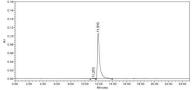
The PanDemit Universal Nuclease supplied by our company has a purity of ≥95% as determined by SEC-HPLC, with a specific activity up to 2×10‘ U/mg. The endotoxin level is less than 0.25 EU per 1000 U, and the product contains no detectable protease activity or viral contaminants.
Product Name | Cat. No. | Packing Specification | Grade |
PanDemit Universal Nuclease | CS-PD-100 | 100,000U | RUO |
CS-PD-500 | 500,000U | RUO | |
CS-GPD-100 | 100,000U | GMP | |
CS-GPD-500 | 500,000U | GMP | |
CS-GPD-5000 | 5000,000U | GMP |
Unit Definition One unit of enzyme activity is defined as the amount of enzyme that reduces the ΔA26₀ v alue by 1.0 within 30 minutes (equivalent to the complete digestion of 37 μg DNA).
Expected Use For various virus purification procedures in vaccines, cell and gene therapy applications.
| Source | E.coli |
| MW | 26.8 kDa |
| Purity | ≥ 95.0% |
| Specific Activity | ≥ 2.0×10⁶ U/mg |
| Endotoxin | < 0.25 EU/1000U |
| Protease | Undetected |
Conditions | Optimal Conditions* | Effective Conditions** |
Mg²+ | 1-2 mM | 1- 10mM |
pH | 8.0-9.2 | 6.0- 10.0 |
Na+/K+ Concentration | 0-20 mM | 0- 150 mM |
Temp. | 37℃ | 4-42℃ |
(Dithiothreitol)DTT | 0- 100 mM | 0-300 mM |
2-mercaptoethanol | 0- 100 mM | 0-300 mM |
PO³ | 0- 10 mM | 0- 100 mM |
* “Optimal Conditions”: Conditions under whichPanDemit nuclease retains more than 90% of its activity.
** “Effective Conditions” : Conditions under whichPanDemit nuclease retains more than 15% of its activity.
Store stably at -20°C, avoid repeated freeze-thaw cycles.
Note: Do not store at -70°C, as freezing may result in loss of enzyme activity.
1. E. coli lysate: To reduce viscosity, the dosage of nuclease is determined based on the bacterial concentration of the lysate. At a bacterial concentration of 50%, the recommended addition ratio of nuclease is 1:1000–5:1000, equivalent to 500,000–2,500,000 U/L. For a bacterial concentration of 5%, the recommended dosage ratio is 1:10000–5:10000.
2. For cell lysates, add 500 units of nuclease per 106–107 cells.
3. For purified adenovirus or viral vaccines (with relatively low DNA content), add the nuclease at a final concentration of 1/10000 to 5/10000, i.e., 5 units per milliliter.
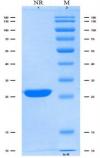
| SDS-PAGE | SEC-HPLC | LC-MS |
|
|
|
Non-reduced (NR) SDS-PAGE silver staining showed the target protein with a molecular weight of about 27kDa, and no other impurities were seen. | SEC-HPLC of recombinantPanDemit with one peak | LC/MS analysis confirms that PanDemit molecular weight matches with theoretical value (26836.7887) |
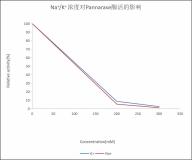
1. Effect of Sodium Ions (Na⁺) on the Activity of PanDemit Nuclease
Sodium and potassium ions (Na⁺/K⁺) strongly inhibit the endonuclease activity ofPanDemit; complete loss of enzyme activity occurs at concentrations above 300 mM.
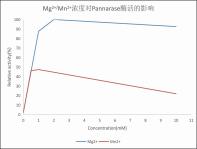
2. Effects of Mg2⁺/Mn2⁺ Ions on PanDemit Enzyme Activity
1-2 mM Mg²⁺or Mn²⁺is essential for the endonuclease activity of PanDemit; Mg²⁺is preferred as it enables the enzyme to reach optimal activity.
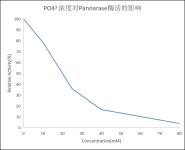
3. Effect of Phosphate (PO43-) Concentration on PanDemit Activity
Phosphate ions (PO43-) strongly inhibit PanDemit activity, and approximately 80 mM phosphate leads to complete enzyme inactivation.(The incubation buffer used in this assay was Tris-phosphate buffer.)
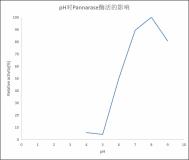
4. Comparison of PanDemit Enzyme Activity under Different pH Conditions
The optimal pH range for PanDemit activity is 8.0–9.2.
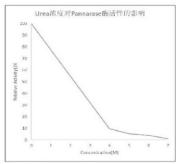
5. Effect of Urea Concentration on PanDemit Activity
PanDemit retains relatively high activity at low urea concentrations. The enzyme can also be applied for nucleic acid degradation at elevated urea levels, with increased enzyme dosage used to compensate for reduced activity.
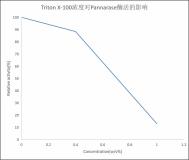
6. Effect of Triton X- 100 Concentration on PanDemit Activity
The effect of detergent on PanDemit activity was evaluated by adding the test detergent into the standard activity assay system. Triton X- 100 exhibits no inhibitory effect on PanDemit at concentrations below 0.4%.
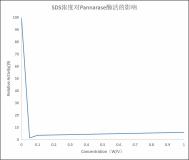
7. Effect of SDS Concentration on PanDemit Activity
SDS exerts strong inhibitory effects on PanDemit nuclease activity, resulting in complete enzyme inactivation even at a concentration of 0.05%.
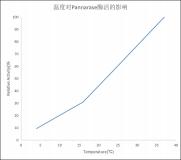
8. Effect of Temperature on PanDemit Activity
37 °C is the optimal reaction temperature for PanDemit. Its enzymatic activity decreases as temperature drops. If the enzyme is applied at low temperatures, the incubation time can be extended appropriately. Increasing enzyme dosage is not recommended for nucleic acid removal under such conditions.
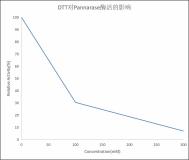
9. Effect of Different Concentrations of Dithiothreitol (DTT) on PanDemit Activity
PanDemit is tolerant to high concentrations of DTT. The enzyme retains over 90% of its original activity in the presence of0– 100 mM DTT and remains catalytically active at DTT concentrations below 300 mM.
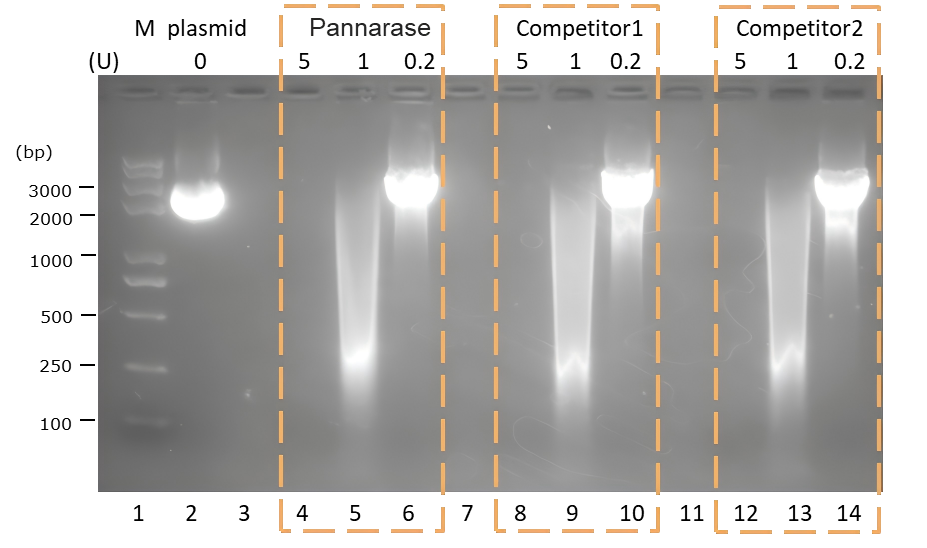
10. Plasmid DNA Digestion Assay
The plasmid substrate was diluted to 1 mg/mL with assay buffer (50 mM Tris-HCl, pH 8.0, 1 mM MgCl₂ , 0.1 mg/mL BSA). The substrate was incubated with varying units of PanDemit and other nucleases at 37°C for 30 min. DNA fragments were analyzed by agarose gel electrophoresis followed by gel imaging.
Company Name: CellStore Biotechnology Co., Ltd.
Address: 5-101, Bldg. 10, No.6 Dongsheng Science and Technology Park North St. , Haidian Dist., Beijing, China.
Phone: +86-10-8217-0580
Email: marketing@cellstorebio.com
Website: www.cellstore-global.com
For more information about CellStore Biotechnology or our products, feel free to contact us.
- Partnering with us?
- Want to become our distributor?
- Some feedback that you have?