Email Us
For digestion used in adherent cell culture

TrypLiber Cell Dissociation Solution

For digestion used in adherent cell culture


1. Acquisition of primary cells for digestion and dissociation of tissue sections

2. For passage digestion of adherent cells

3. For cell digestion in microcarrier culture methods


Cat. No. & Specifications


Product Name

Cat. No.

Packing Specification

Grade

TrypLiber Cell Dissociation Solution (1×)

CS-TL-100

100mL

RUO

TrypLiber Cell Dissociation Solution (1×)

CS-TL-500

500mL

RUO

TrypLiber Cell Dissociation Solution (1×)

CS-GTL-100

100mL

GMP

TrypLiber Cell Dissociation Solution (1×)

CS-GTL-500

500mL

GMP

TrypLiber Cell Dissociation Solution (1×)

CS-GTL-5000

5000mL

GMP

TrypLiber Cell Dissociation Solution (10×)

CS-TL-100-2

100mL

RUO

TrypLiber Cell Dissociation Solution (10×)

CS-TL-500-2

500mL

RUO

TrypLiber Cell Dissociation Solution (10×)

CS-GTL-100-2

100mL

GMP

TrypLiber Cell Dissociation Solution (10×)

CS-GTL-500-2

500mL

GMP


Identity

Sequence Source

Fusarium oxysporum

External Appearance Term

vifrification

molecular weight

22.2 kDa

Purity (size exclusion chromatography)

≥95%

specific activity*

≥27000 U/mg

Activity (BAEE)

≥250 U/mL

Endotoxin

<1 EU/mL

Sterility

Aseptic should be ensured

Optimal pH

7.0-7.4

*Definition of enzyme activity unit: At 25°C, pH 7.6, in a reaction system of 3.2 mL (1 cm optical path length), an increase of 0.003 in the absorbance value at 253 nm per minute when BAEE (N-Benzoyl-L-Arginine-Ethyl ester) is enzymatically hydrolyzed is defined as one activity unit (Unit/mg protein) (China Pharmacopoeia, 2025 edition).


sec-hplc-enzyme-purity-determination.jpg

SEC-HPLC enzyme purity determination


Product description

TrypLiber (EC: 3.4.21.4) is a trypsin-like protease derived from Fusarium oxysporum, which was expressed and purified from Escherichia coli. This enzyme exhibits identical cleavage sites and pH activity range to trypsin, capable of cleaving the carboxyl termini of arginine and lysine residues in protein sequences.


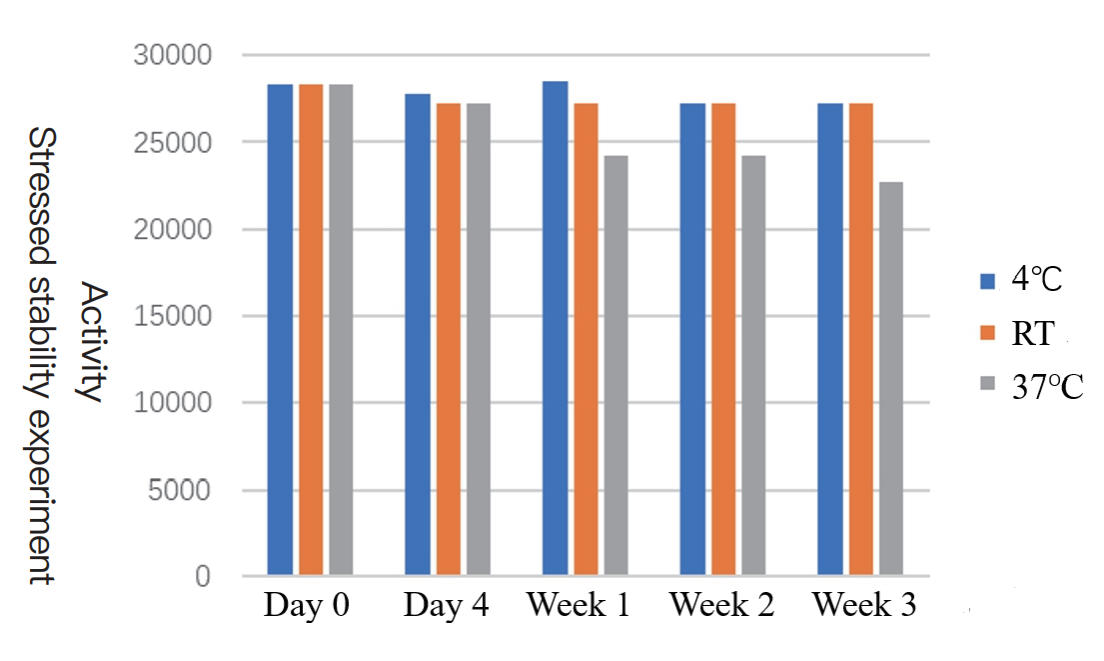
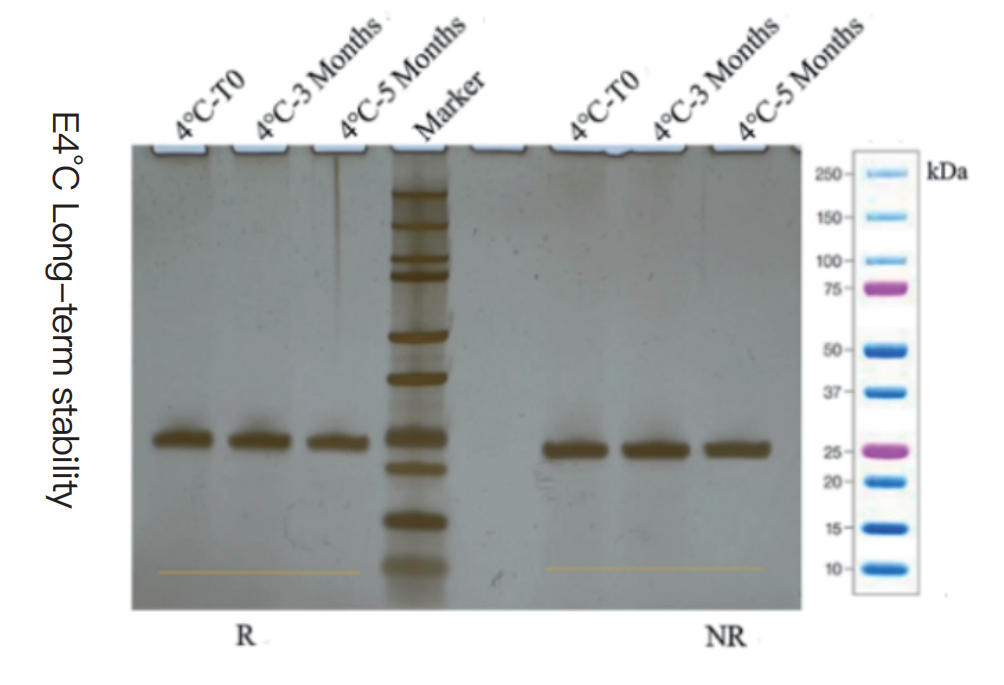
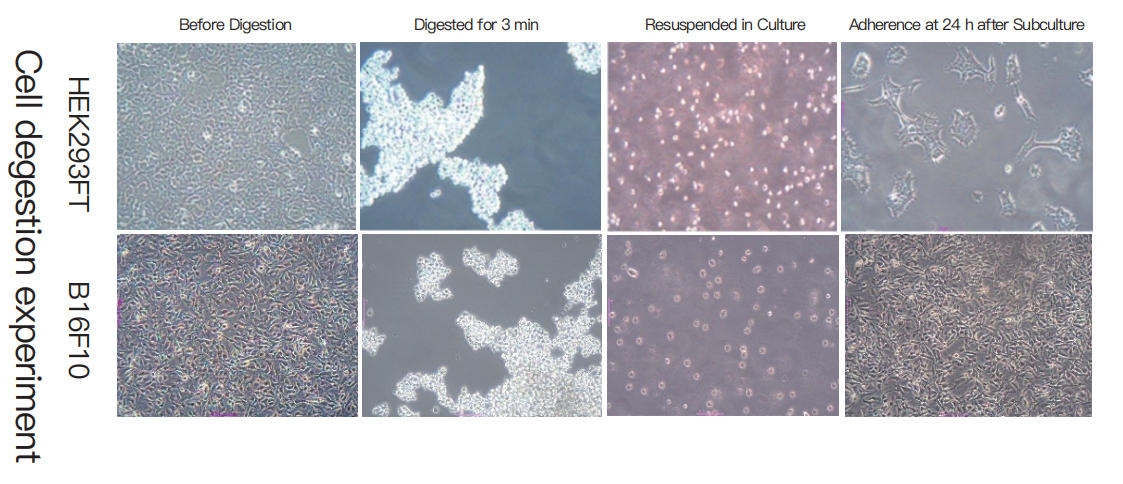
TrypLiber enzyme has been demonstrated in cellular experiments to effectively dissociate adherent mammalian cell lines, exhibiting dissociation kinetics similar to that of porcine trypsin while demonstrating lower cytotoxicity. The cell replication, proliferation kinetics, and long-term viability are consistent with those observed in cells harvested using animal trypsin. Purity analysis indicates that TrypLiber exhibits higher purity, greater molecular stability, and superior activity retention compared to conventional trypsin.


trypliber-3d-structure-diagram.jpg

TrypLiber 3D structure diagram


Storage conditions and shelf life

Store at 2-8 °C away from light for up to 24 months.


Instructions for use

1. TrypLiber can be used at room temperature or preheated to 37°C before use for optimal digestion.


2. Operating Procedures (using a T25 culture flask as an example)

2.1 Perform digestion and passage when the cells in the T25 culture have achieved over 90% fusion.

2.2 Remove the cell culture medium and add 5mL of PBS for washing (if serum-free medium is used, one wash is

sufficient; if serum-containing medium is used, wash the cells three times consecutively to ensure complete removal of serum residues, otherwise the digestion time will be prolonged).

2.3 Add 2mL of TrypLiber enzyme per bottle and incubate at 37 °C or room temperature for 3 minutes for digestion (the digestion time varies depending on the cell type; adjust accordingly).

2.4 If the cells become round, immediately add 4mL of PBS or complete culture medium for dilution.

2.5 Transfer the aforementioned cell suspension to a centrifuge tube and centrifuge at 1300 rpm (300 g) for 5 minutes.

2.6 Remove the supernatant from the centrifuge tube.

2.7 Select the appropriate culture medium (for cell passage) or cryopreservation solution (for cell cryopreservation) based on experimental objectives.


3. The recommended dilution solutions for TrypLiber digestion medium are PBS or normal saline; if the digestion medium concentration is too high, it may be appropriately diluted.


Statistics on the amount of digestive enzymes used in different culture bottles

culture-flask

Volume of digestive enzyme addition

Volume of diluent added

T25

2 mL

4 mL

T75

5 mL

10 mL

T175

10 mL

20 mL


Contact

Company Name: CellStore Biotechnology Co., Ltd.

Address: 5-101, Bldg. 10, No.6 Dongsheng Science and Technology Park North St. , Haidian Dist., Beijing, China.

Phone: +86-10-8217-0580

Email: marketing@cellstorebio.com

Website: www.cellstore-global.com

For digestion used in adherent cell culture

TrypLiber Cell Dissociation Solution User Guide

Related Cryopreservation Media
Inquiry

For more information about CellStore Biotechnology or our products, feel free to contact us. 


- Partnering with us? 

- Want to become our distributor? 

- Some feedback that you have? 


Privacy Policy

Quick Links
What Is Mesenchymal Cryopreservation Medium? Customer Case|CS-PM-D1 Enables High-Quality CBMC Cryopreservation Key Points for Evaluating Cryopreservation Effectiveness and Sample Transfer CellStore Stem Cell Cryopreservation Medium: Powering China's Stem Cell Therapy Revolution in 2025 Critical Considerations for Effective Cryopreservation of Cells and Tissues: from Experimental Design to Protocol Execution Reshaping the Microcosm of Life: Let 3D Models Say Goodbye to the "Frostbite" Era How to Freeze and Thaw Cells with Cell Freezing Medium? How to Choose the Right Tissue Culture Media? Cryopreservation Best Practices 8 Components of Tissue Culture Media Homemade freezing medium or commercial freezing medium? Simplifying PBMC Cryopreservation without Compromise — Application 1 Simplifying PBMC Cryopreservation: Direct Freezing of Whole Blood Application 2 How Does Cryopreservation Media Protect Cells During Freezing and Long-Term Storage? Cryopreservation of Embryos Advantages What Is Cryopreservation of Stem Cells and Is It Worth It? Does Cryopreservation Impact T Cell Viability and Therapeutic Efficacy? A Stable Freeze–Thaw Step Can Make All The Difference In Cd34⁺ Cell Workflows. Why Does “dead volume” Still Challenge Automated Cgt Manufacturing — And How Can We Design Around It Instead Of Fighting It? Case Sharing | Clinical Application: Performance Interpretation of CS-SC-D1 Cryopreservation Medium Technology Sharing | Rethinking CHO Cell Banking: Toxicity, Workflow Burden & Simpler Operations CS-DX-N2 Keeps >90% Of Cells Alive, With Markers Virtually Unchanged From Fresh What Happens to Cell Viability After 3–6 Months of Cryopreservation? Cryopreservation Challenges in iMSC Cell Therapy Workflows Cryopreservation for CAR-NK Cells: Functional Retention Matters Stability Under Extended 4°C Holding In Msc Manufacturing Post-Thaw Stability Under Room-Temperature Holding In Msc Manufacturing Beyond Viability: Evaluating PBMC Cryopreservation from a Post-Thaw Workflow Perspective Understanding PBMC Freezing and Culture New product launch — meet AirLite Cells need to be more than alive after thawing
Email
lumy@cellstore-global.com
Tel
010-82170580
Address
5-101, Bldg. 10, No. 6 Dongsheng Science and Technology Park North St., Haidian Dist., Beijing, China.