


Inquiry
For more information about CellStore Biotechnology or our products, feel free to contact us.
- Partnering with us?
- Want to become our distributor?
- Some feedback that you have?


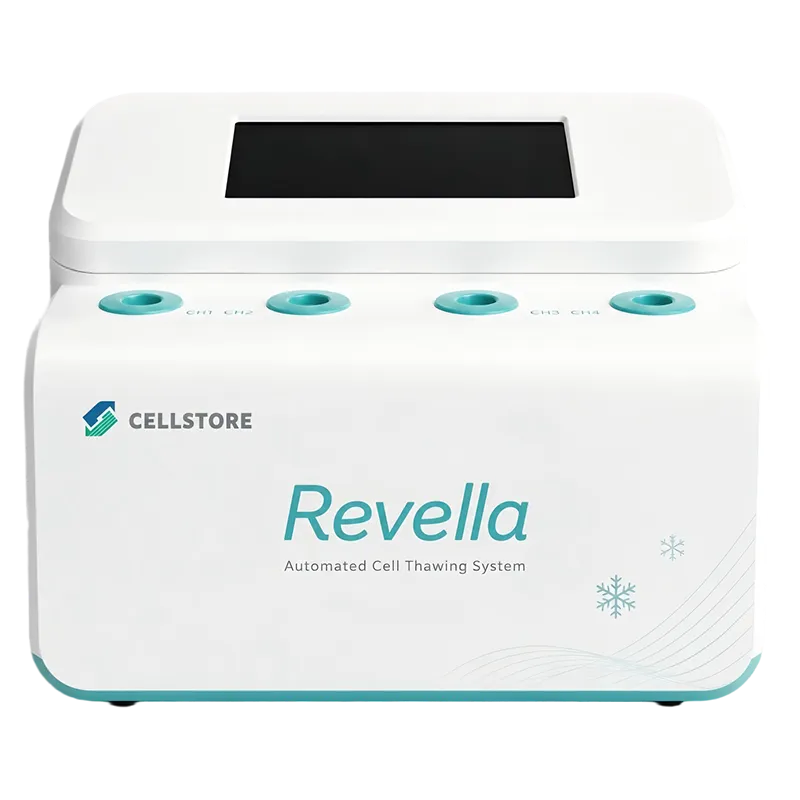
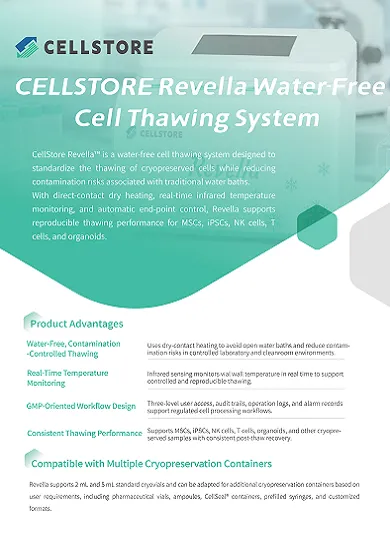
CellStore Revella is a water-free cell thawing system designed to standardize the thawing of cryopreserved cells while reducing the variability and contamination risks associated with traditional water bath.
With driect-contact dry heating, real-time infrared temperature monitoring, and automatic end-point control, Revella supports reproducible thawing performance for MSCs, iPSCs, NK cells, T cells, and organoids.
Water-Free, Contamination-Controlled Thawing
Revella uses dry-contact heating to avoid open water bath and reduce contamination risks in controlled laboratory and cleanroom environments.
Real-Time Temperature Monitoring
A high-precision infrared sensor monitors the cryovial wall temperature in real time, supporting controlled and reproducible thawing.
GMP-Oriented Workflows Design
Three-level user access, audit trail, operation logs, and alarm records support controlled and reproducible workflows.
Consistent Thawing Performance
Revella supports MSCs, iPSCs, NK cells, T cells, and organoids,and other cryopreserved samples with consistent post-thaw recovery.
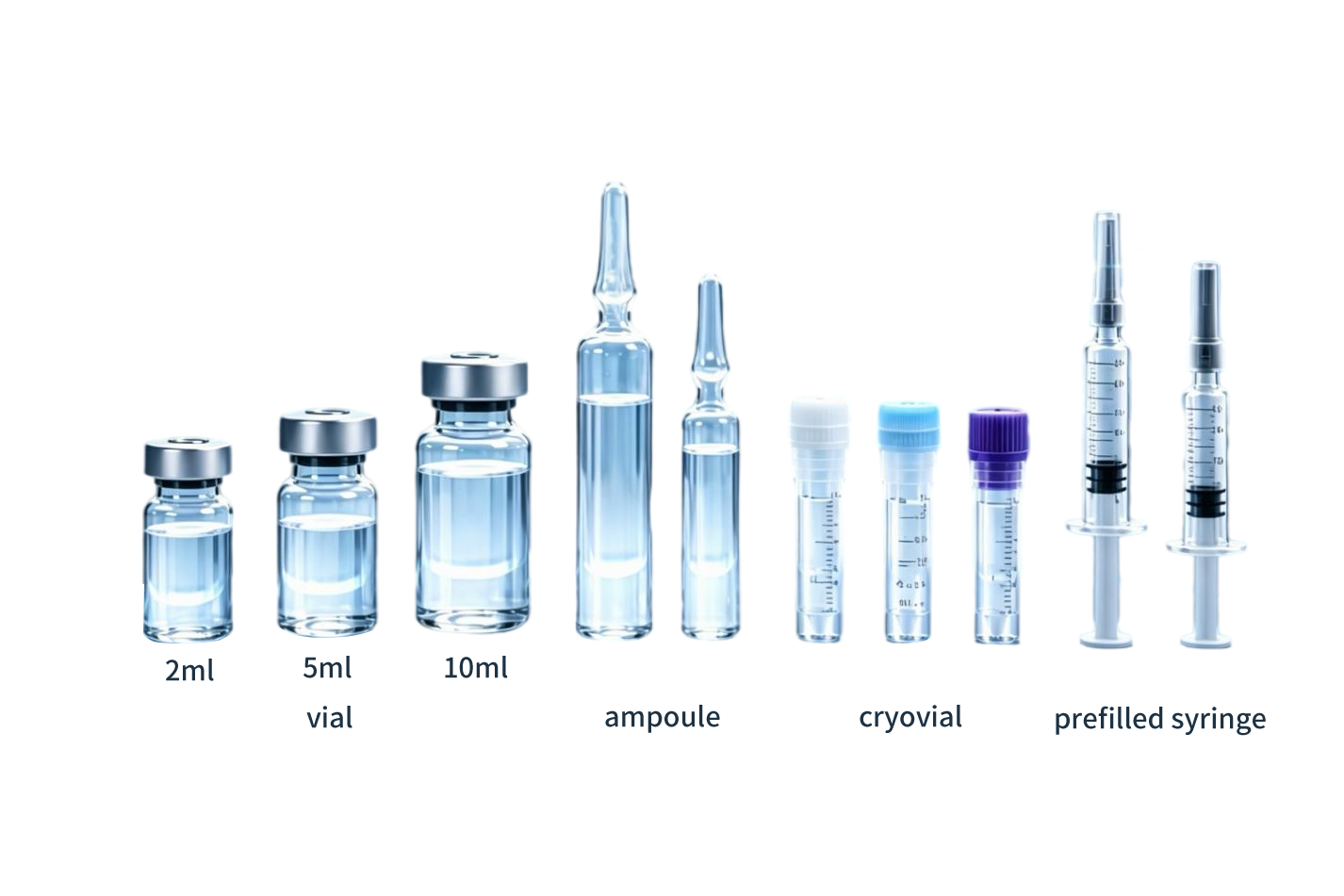
Revella supports 2 mL and 5 mL cryovials and can be adapted for additional cryoprevervation containers based on user requirements, including pharmaceutical vials, ampoules, CellSeal® containers, pre-filled syringes, and customized formats.
Three-level user access control with hierarchical permission.
Real-time generation of thawing logs, operation logs, and alarm logs with automatic backup.
Log records are protected from modification or deletion.
Password management supports complexity requirements, expiration settings, and mandatory password updates.
| Item | Specification |
| Model | CellStore Revella Water-Free Cell Thawing System |
| Heating Method | Direct-contact dry heating with infrared temperature monitoring |
| Temperature Accuracy | ±0.1°C |
| Thawing Time | Approx. 2–3 minutes |
| Compatible Cryovials | 2 mL and 5 mL standard cryovials |
| Display | Touchscreen display |
| User Management | Three-level privilege management |
| Data Record | Thawing logs, operation logs, alarm logs, and real-time log backup |
| Data Export | Data export and wireless report delivery by email |
| Power Supply | 100–240 V AC, 50/60 Hz |
| Alarms | Over-temperature alert, operation error alert |
| Completion Mode | Automatic cryovial ejection upon thaw completion |
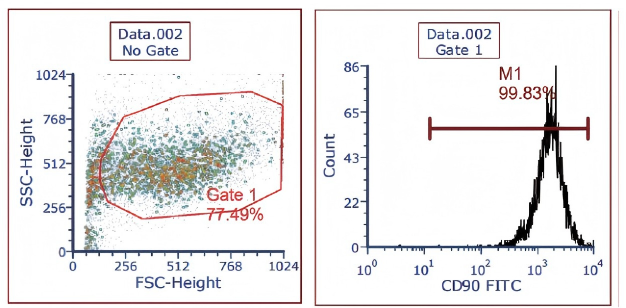
After thawing MSCs, iPSCs, T cells, NK cells, and other cryopreserved samples, Revella showed comparable post-thaw viability and purity to traditional water bath thawing, , while offering a water-free and traceable thawing process.
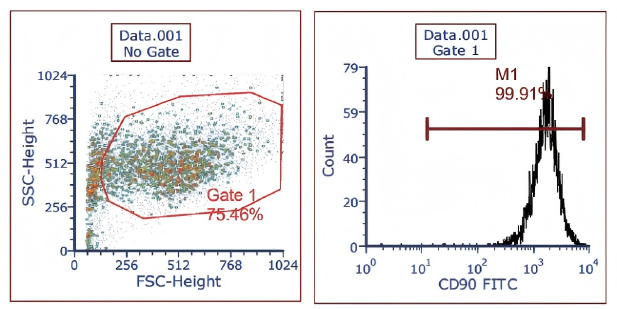
Comparable Thawing Performance with Improved Workflow Control
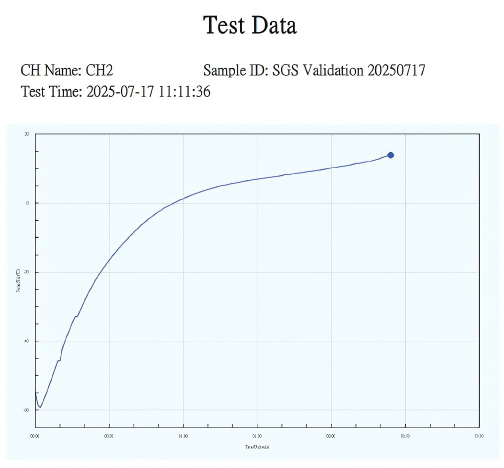
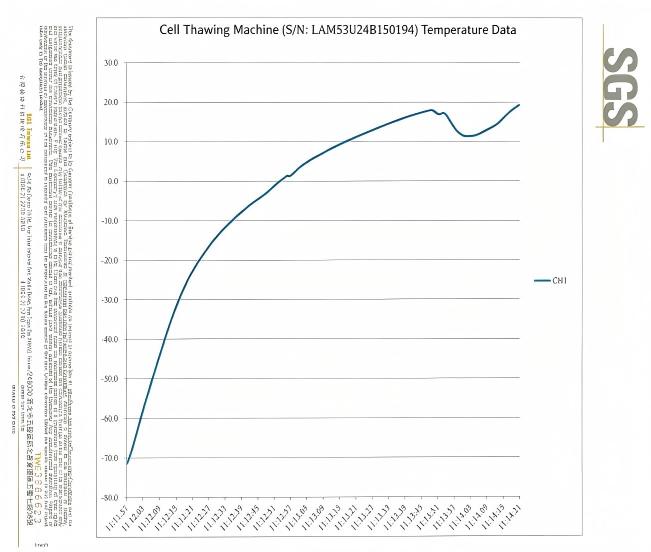
Third-party SGS testing confirms that the vial wall temperature profile closely matches the internal liquid temperature profile of the cryovial.
| Product | Cat. No. | Description | ||
| CellStore Revella Water-Free Cell Thawing System | CS-THAW-01 | Includes four 2 mL cryovial thawing modules | ||
| CellStore Revella Water-Free Cell Thawing System | CS-THAW-02 | Includes four 5 mL cryovial thawing modules | ||
| CellStore Revella Water-Free Cell Thawing System | CS-THAW-03 | Includes four vial thawing modules | ||
| CellStore Revella Water-Free Cell Thawing System | CS-THAW-04 | Includes four COP vial thawing modules | ||
Need to Confirm Adapter Compatibility?
Tell us your cryopreservation container format, sample volume, and application. Our team will help confirm the suitable Revella configuration or adapter.
Request a quote or product brochure
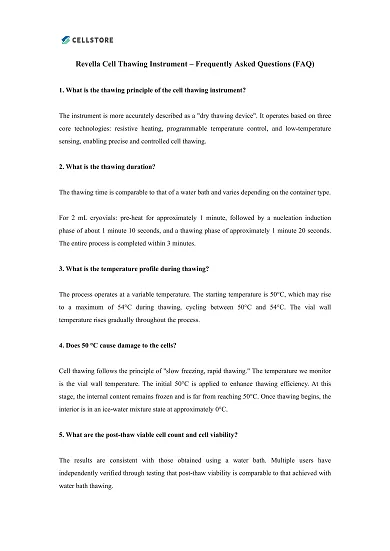
1. What is the thawing principle of the cell thawing instrument?
The instrument is more accurately described as a "dry thawing device". It operates based on three core technologies: resistive heating, programmable temperature control, and low-temperature sensing, enabling precise and controlled cell thawing
2. What is the thawing duration?
The thawing time is comparable to that of a water bath and varies depending on the container type. For 2 mL cryovials: pre-heat for approximately 1 minute, followed by a nucleation induction phase of about 1 minute 10 seconds, and a thawing phase of approximately 1 minute 20 seconds. The entire process is completed within 3 minutes.
3. Does 50 °C cause damage to the cells?
Cell thawing follows the principle of "slow freezing, rapid thawing." The temperature we monitor is the vial wall temperature. The initial 50°C is applied to enhance thawing efficiency. At this stage, the internal content remains frozen and is far from reaching 50°C. Once thawing begins, the interior is in an ice-water mixture state at approximately 0°C.
4. What are the advantages over a water bath?
Water bath thawing is a traditional method that is low-cost and easy to operate. However, it is typically limited to routine laboratory use or Grade D cleanroom environments, which inherently increases the risk of contamination. Additionally, water baths are not suitable for use in GMP-grade clean areas. Our Cell Thawing Instrument is a dry thawing device designed for use in Grade B and even B+A cleanroom environments, enabling higher sterility assurance for cell storage and transfer.
The programmable, automated thawing process also offers superior reproducibility compared to water baths, making it ideal for R&D and quality control applications. Routine maintenance, such as water bath replacement, is also eliminated.
5. Can the instrument be validated?
Yes. We provide 3Q qualification documentation in compliance with GMP quality system requirements, with services delivered by our factory engineers. Please note that validation tools are not available for purchase separately.
6. Can the instrument be used inside a biosafety cabinet or laminar flow hood?
Yes. The compact design allows it to fit inside most cabinets, and the instrument surface can be disinfected with alcohol.
7. How is the instrument sterilized?
The entire unit can be wiped with 75% alcohol. The vial wells can be cleaned with an alcohol-wiped swab. The internal circuitry is protected against moisture; however, do not pour alcohol directly into the unit. After wiping, we recommend placing the instrument in a pass-through box with UV irradiation, which generates ozone to achieve overall sterilization.
8. What sample types are compatible?
The standard configuration is compatible with 2 mL cryovials filled with 0.3–1.5 mL of sample. Other vial formats can be accommodated upon customization.
For more information about CellStore Biotechnology or our products, feel free to contact us.
- Partnering with us?
- Want to become our distributor?
- Some feedback that you have?